Cincinnati's Losant acquired by global open source giant SUSE, capping a decade-long bet on industrial IoT
SUSE plans to open source the Cincinnati-built platform and fold it into its edge computing portfolio — a major exit for one of Ohio's longest-running IoT startups backed by CincyTech and Steve Case's Rise of the Rest fund.


Luxembourg-based SUSE, one of the world's largest enterprise open source companies, has acquired Cincinnati's Losant, an Industrial Internet of Things platform headquartered in the Over-the-Rhine neighborhood. Financial terms were not disclosed.
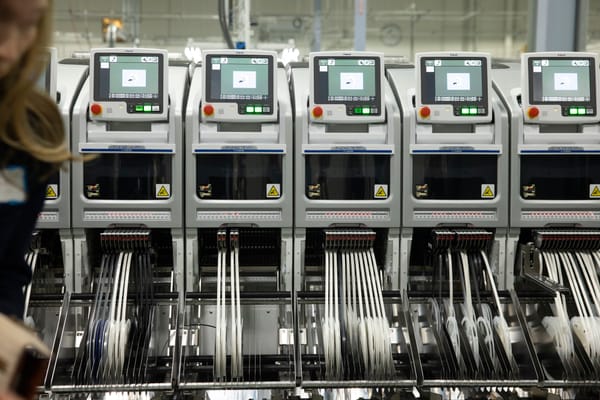
The deal gives SUSE something it didn't have: a software layer that reaches all the way down to the industrial "Tiny Edge" — the sensors, controllers, and devices on factory floors and in the field where physical operations generate data.
The Losant platform and its people will be part of SUSE's Edge portfolio and business unit. SUSE plans to open source the Losant technology.
Why it matters
Edge computing — pushing processing power closer to where data is generated rather than routing it back to centralized clouds — has become one of the most contested battlegrounds in enterprise software. Industrial customers want real-time insights from their equipment, not reports that arrive minutes or hours later.
SUSE already had infrastructure for the "near" and "far" edge. What it lacked was the application layer that sits directly on industrial devices. Losant fills that gap with a low-code platform that handles device orchestration, data management, and workflow automation.
"The acquisition of Losant transforms SUSE from an edge infrastructure provider to a full-stack Industrial IoT leader," said Keith Basil, general manager of SUSE Edge. "It allows us to deliver to customers the part of the Edge where the digital world directly meets the physical one, where machines, environments, and people interact in real time, and where AI can be meaningfully deployed to gain better insight into real-world processes."
The Ohio angle
Losant is one of Cincinnati's longest-running startups. Founded in 2015 by Charlie Key, Brandon Cannaday, and Michael Kuehl — who had previously built and sold Modulus, a platform-as-a-service company — Losant raised over $25 million in venture capital according to CB Insights.
Its investor roster reads like a who's who of Ohio's startup infrastructure: CincyTech led its $5.2 million Series A in 2018, alongside Revolution's Rise of the Rest Seed Fund — then led by Steve Case and JD Vance. Vine Street Ventures and TechNexus also participated.
"Having been involved with Charlie Key’s ventures since his early days with Modulus, it has been a privilege to serve on the Board of Losant and witness the team’s dedication to building a world-class IoT platform right here in Ohio," added Emma Off, CEO of CincyTech. "This acquisition by SUSE is a powerful validation of our local tech talent and the innovative technology built by the Losant team. I am confident that under the global stewardship of SUSE, this technology will reach new heights, and I look forward to seeing its impact on the global stage at Susecon this April."
The company grew into an enterprise platform serving customers like Verizon, Warner Bros. Discovery, and Hewlett Packard Enterprise. It was recognized in the 2025 Gartner Magic Quadrant for Global Industrial IoT Platforms.
"Joining forces with SUSE is the natural next step for Losant," said Charlie Key, CEO of Losant. "Combining our low-code Industrial Internet of Things platform with SUSE's 30 plus years of experience in enterprise software will provide customers with stability and interoperability, allowing us to accelerate our mission to help IT leaders turn complex data into immediate operational value."
The strategic shift
For SUSE this buys a complete product story. The company can now pitch manufacturers and industrial operators a single, open source stack that runs from Kubernetes clusters in the data center all the way down to a temperature sensor on a production line.
The open source commitment is notable. Most industrial IoT platforms are proprietary, locking customers into vendor-specific ecosystems. SUSE is betting that open sourcing Losant's technology will accelerate adoption and attract the kind of developer and integrator community that has powered its Linux and Kubernetes businesses for decades.
Industry analysts see the timing as significant. According to 451 Research, IoT endpoints are rapidly evolving into AI endpoints in 2026, triggering what it calls the most significant device refresh cycle in a decade.
By the numbers
- Founded: 2015 in Cincinnati
- Total funding: More than $25 million in venture capital
- Key investors: CincyTech, Revolution's Rise of the Rest, Vine Street Ventures, TechNexus
- Recognition: 2025 Gartner Magic Quadrant for Global Industrial IoT Platforms
The bigger picture
The acquisition fits a pattern playing out across Ohio's tech ecosystem. The state's startups are increasingly building deep-tech platforms — not just consumer apps — that attract global acquirers. Losant joins a growing list of Ohio-built companies whose technology is now embedded in global enterprise infrastructure.
For Cincinnati's startup community specifically, it's a validation of a long bet. CincyTech first invested in Losant in 2016. A decade later, that platform is the centerpiece of a global open source company's industrial strategy.