Ohio gains center stage in military tech as Anduril wins historic Air Force fighter program
Central Ohio is about to build the Air Force’s next generation of semi‑autonomous “robotic wingmen,” as Anduril’s FQ‑44 Fury fighter and Lattice mission autonomy software move from rapid prototyping into full production at the new Arsenal‑1 campus.

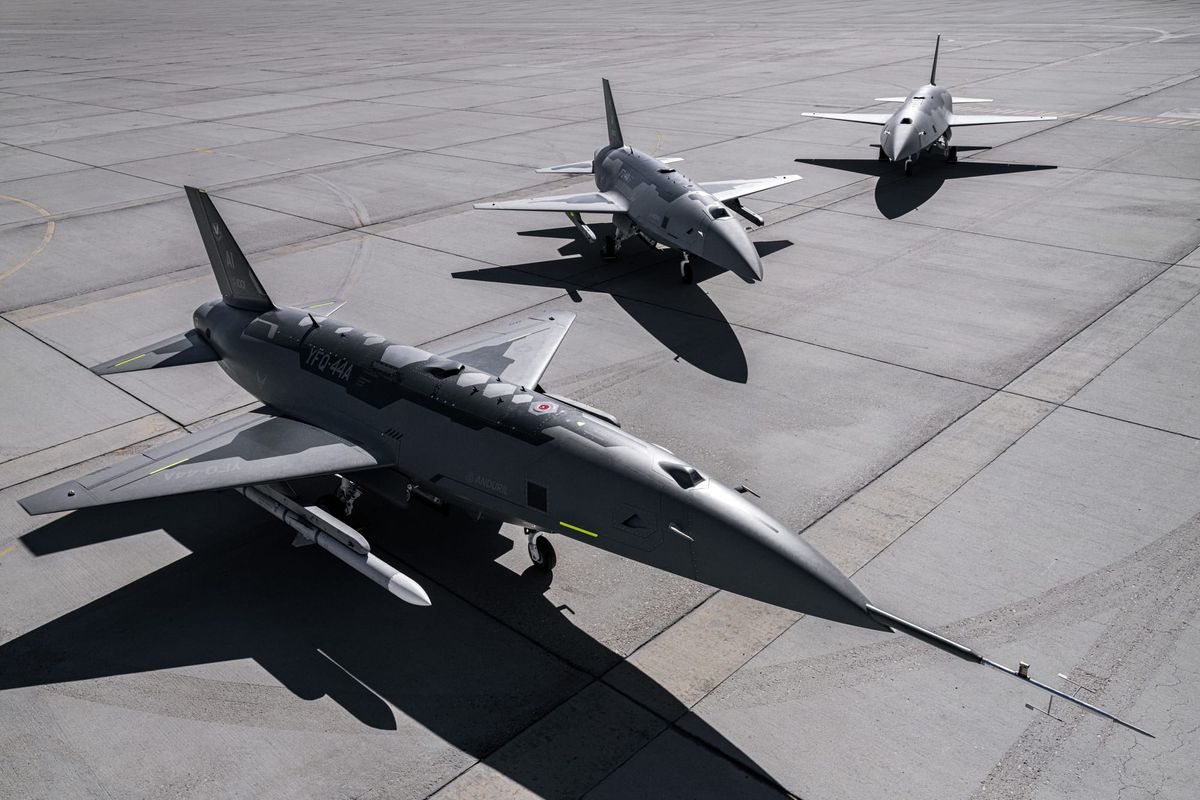
Defense tech company Anduril Industries has secured major U.S. Air Force contracts to build both the physical airframe and the core mission autonomy software for the high‑stakes Collaborative Combat Aircraft (CCA) program. The semi‑autonomous fighter jets will be manufactured in Central Ohio.
Why it matters
This represents a major structural shift for both military procurement and Ohio’s tech sector. It ties one of the Pentagon’s most significant modernization bets directly to Ohio’s industrial and software base.
The industry shock
This marks the first time a new company has won a fighter aircraft program since the 1970s, disrupting decades of dominance by traditional aerospace giants like Lockheed Martin and Boeing. It signals that software‑native defense firms can now compete head‑on for front‑line combat systems.
The Ohio footprint
Initial production is launching in Building 1 of Anduril’s “Arsenal‑1” hyperscale manufacturing campus in Pickaway County, near Rickenbacker International Airport. The highly flexible, mobile assembly line is capable of delivering up to 150 aircraft per year in its current configuration, positioning Central Ohio as the production hub for America’s next‑generation autonomous fleet.
The details
The Air Force split the CCA program into two distinct tracks—and Anduril landed roles on both.
- The Hardware (FQ‑44): Anduril will deliver an initial set of production FQ‑44 semi‑autonomous fighter aircraft—the missionized production variant of its “Fury” jet—for operational testing and early fielding. Built to keep pace with crewed jets, it features short‑field takeoff capabilities and a combat radius that significantly exceeds current human‑piloted fighters.
- The Software (Lattice): Anduril’s “Lattice for Mission Autonomy” will serve as the brain of the operation, dictating how these robotic wingmen dynamically collaborate and execute tactics mid‑fight across complex missions.
The supply chain play
Unlike legacy defense contractors that rely on highly custom, proprietary components, roughly 90% of Anduril’s hardware uses commercially available materials—including commercial jet turbines bought on the open market. That commercial‑first approach allows Ohio’s automotive, aerospace, and advanced manufacturing firms to plug into Anduril’s supply chain without decades of specialized defense retooling, creating a faster on‑ramp for local suppliers.
Behind the scenes
The software win is also a comeback story. Anduril was eliminated from an earlier prototyping phase of the Air Force autonomy contract in mid‑2025. Instead of walking away, the company quadrupled its engineering team and poured in its own capital to completely rebuild its mission autonomy stack from scratch. The revamped software completed its first flight on the YFQ‑44A prototype on February 24, 2026, followed by increasingly complex missions.
The timeline
Moving a fighter aircraft from prototype to production typically takes a decade or more. Anduril and the Air Force compressed the timeline for the FQ‑44 into just over two years—from prototype award in April 2024 to a full production contract this month. The ultimate goal: have built in Ohio operational fleets of robotic combat aircraft sitting on the ramp by the end of the decade.