JumpStart's no-equity accelerators help Ohio founders raise $40 million
By offering non-dilutive funding instead of demanding company ownership, this accelerator program helps regional startups build early traction. Founders gain access to a specialized provider network that de-risks their businesses before they ever pitch to investors.

Two years ago, JumpStart made Ohio's early-stage founders a simple offer. Bring your HealthTech or Software company, take the resources you need to scale, and give up no equity to do it. Seventy-nine startups have since put that offer to the test, and the early results are starting to show up where they count.
Companies that have moved through the Trailblazer Accelerators have collectively raised more than $40 million and generated upwards of $10 million in revenue, figures the organization says continue to climb. Kaleigh Gallagher, JumpStart's vice president of tech services and network management, said the scale caught the team off guard.
"We expected strong traction, but seeing companies raise $40 million in capital and generate $10 million in revenue this early in the program's life is remarkable," she stated.
The program is built on non-dilutive funding, $11.84 million of it awarded to date, that companies can spend across a curated network of more than 200 vetted providers handling everything from legal and product development to marketing and finance. Support comes primarily from Ohio Third Frontier, with additional backing from the U.S. Economic Development Administration, grants from the Burton D. Morgan Foundation, and a roster of corporate and institutional sponsors. Those partners are what make the no-equity structure viable. Without them, Gallagher noted, the program might look a little different.
The model was a deliberate response to a problem JumpStart watched Midwest founders face again and again. Entrepreneurs in the region are often asked to de-risk their businesses far earlier than their coastal counterparts before investors will commit, which can force them to give up ownership before they have any leverage. Trailblazer was designed to buy them room.
That structure has played out the way the program intended. Founders walk into their raises with more confidence because they have already proven out their product, won early customers, and tightened their fundamentals. Many close on stronger terms, and some put the non-dilutive membership to work stretching venture capital further once it lands.
JumpStart runs two separate tracks, one for software and one for HealthTech, because the founders in each need fundamentally different things. HealthTech companies require clinical expertise, regulatory guidance, data security support, and a way into health systems. Software founders more often need help with product architecture, customer acquisition, and getting to market. Splitting the programs lets JumpStart build provider networks deep enough to match each industry rather than handing everyone the same generic playbook.
One of the clearest signals the program is working has nothing to do with dollar figures. Founders who have been through Trailblazer are now steering other founders toward it.
"Founder referrals are one of the strongest signals of trust you can get," Gallagher said. These are entrepreneurs who lived the experience and know precisely what it changed for them, she added, and when they send the next founder along, they stop being graduates and start becoming advocates.
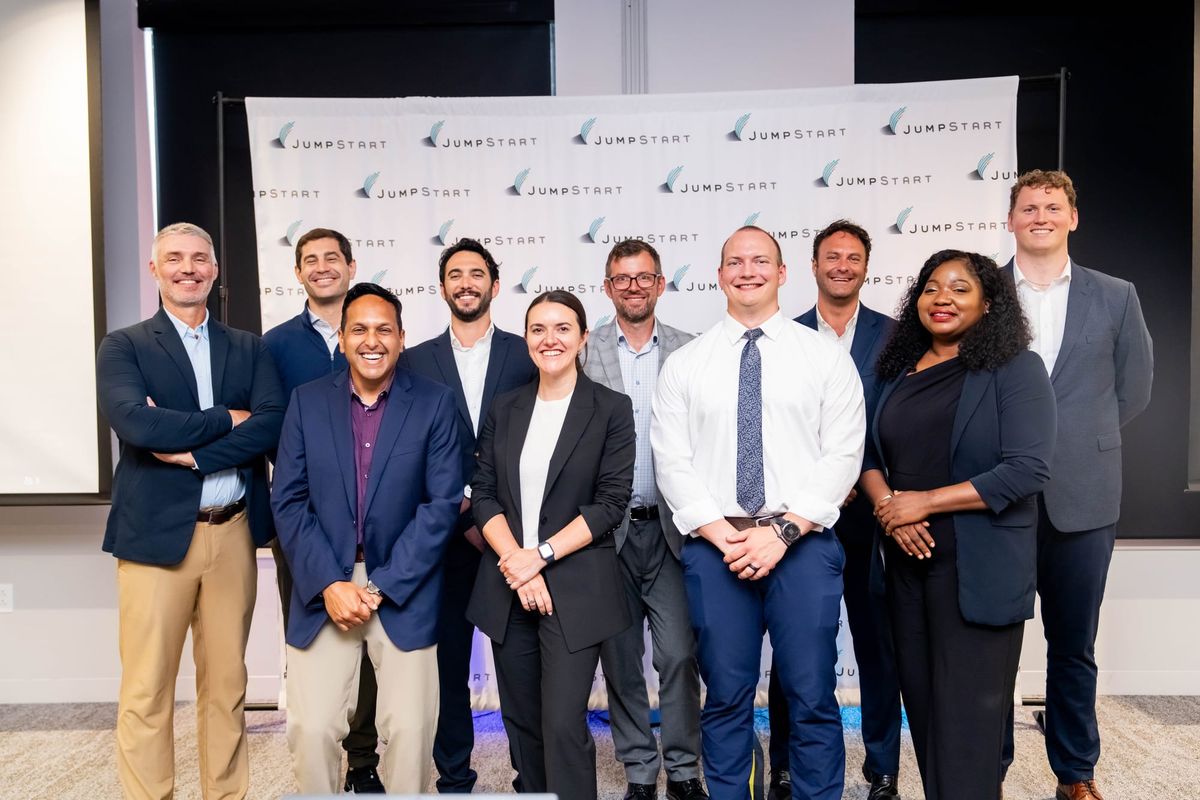
The companies coming up behind them were on full display in Cleveland. At the 2026 HealthTech Trailblazer Spring Showcase on June 11, nine Ohio founders pitched work aimed at some of medicine's harder problems. Auni Therapeutics is developing immunotherapies for severe food allergies. Dianyx Innovations is building smart sensors into dental appliances to stream sleep and health data to providers. Medical Interface Solutions is putting AI-powered stroke screening into the hands of first responders, while TidalMed has built a real-time sensor that sends discreet leak alerts to ostomy patients and their caregivers. Others in the lineup included Meteora3D, MindMode AI, Open NeuroTech, Predictable Benefits, and RE-Assist.
For JumpStart chief executive Lorne Novick, watching that pipeline mature is the point. "I have been impressed by the sheer depth of innovation coming from Ohio founders," he commented, pointing to companies taking on everything from how care is delivered to how businesses run. Seeing them graduate, raise money, and sign customers, he added, confirms what the programs were built to do.
The program defines its own finish line plainly. A company has done what it came to do when its founder can show real traction, make the case for the business without flinching, and move into the next stage with a network already behind them.