Ohio's biopharma workforce push extends beyond Amgen's walls
Supported by a $30 million JobsOhio investment, the Ohio Life Science Training Center is partnering with community colleges to build a statewide pipeline. This initiative delivers short-term, module-based training for technical biomanufacturing jobs that do not require degrees.

A new report from TEConomy Partners, commissioned by the Pharmaceutical Research and Manufacturers of America (PhRMA), points to Amgen's Central Ohio operations as a model for how the biopharmaceutical industry is building local talent pipelines alongside its U.S. manufacturing expansion.
The report examines the workforce behind the industry's growing domestic manufacturing footprint, finding that the investments are creating not only new facilities but also skilled jobs and career pathways, including many roles that do not require a four-year degree.
Amgen's Central Ohio site is featured as an example of that approach. The site opened in 2024 with an initial investment of $474 million that has since grown, and it is equipped with automated guided vehicles, automated storage and retrieval systems, and extensive digital monitoring, making it one of the most automation-intensive pharmaceutical packaging operations in the country. In April 2025, Amgen announced a $900 million manufacturing expansion in Ohio that will create 350 additional jobs, bringing the company's total investment in Central Ohio to more than $1.4 billion and its job creation total to 750 positions.
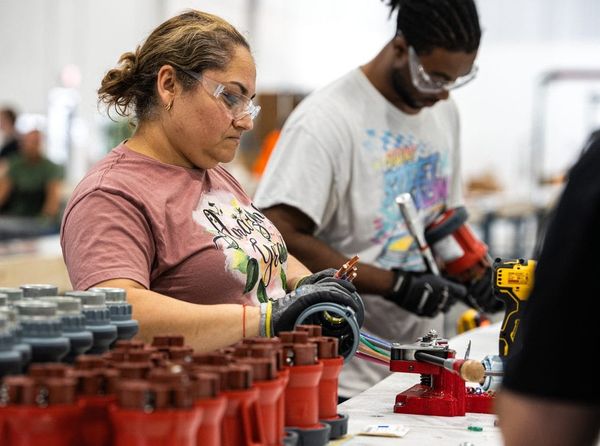
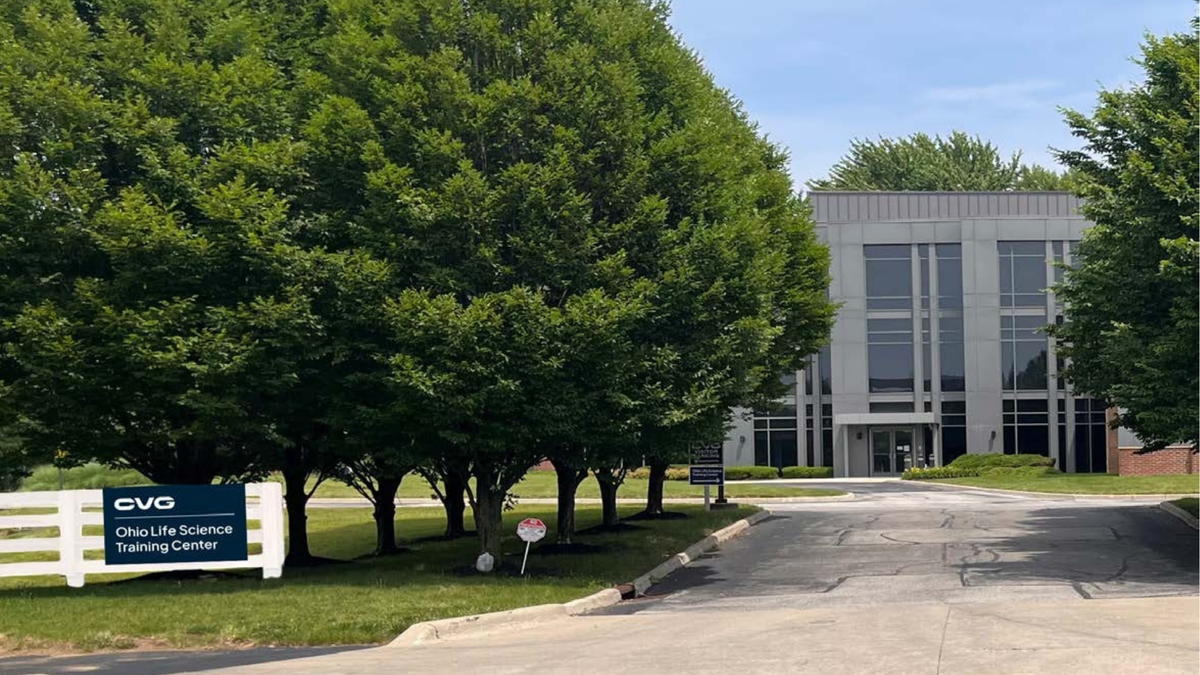
Behind that growth sits the Ohio Life Science Training Center (OLSTC), which partners with Columbus State Community College (CSCC) on module-based programming built to feed candidates into roles like Amgen's. Three 60-hour modules combine to form a short-term certificate covering current Good Manufacturing Practice (cGMP) standards, contextualized manufacturing foundations, and lab skills. Participants typically pair the cGMP module with one additional, more role-specific module depending on the type of opening they're pursuing. An industry-recognized certification from Biotility is also being embedded in the curriculum, with availability expected ahead of 2027, and the modules double as an on-ramp into a full associate degree in biotechnology.
"Employers want candidates with exposure to FDA-regulated environments before they'll hire them into entry-level roles. This program is built to give people that exposure on a condensed timeline, so the onboarding burden isn't sitting entirely with the employer," says Eddie Pauline, President and CEO of Ohio Life Sciences.
The early numbers, drawn from CSCC's self-reported data, show 261 enrollments, 186 completions and 127 known job placements, with average post-program earnings of $25.50 an hour compared to $18.16 an hour in pre-program employment. "We consider this data is a floor, not a true placement rate," Pauline noted.
Amgen runs a parallel track of its own. Under the company's Apprentice Process Technician program, candidates complete CSCC coursework alongside 2,000 hours of on-the-job training, after which they become eligible to apply for open roles at the site. Placement data for that track sits with Amgen and CSCC directly.
The training center's reach is also intended to grow well past Columbus State. Pauline explained that expanding the pipeline statewide is an explicit priority of OLSTC's design, with the center meant to anchor a hub-and-spoke network delivering consistent training content through universities, community colleges and technical schools across Ohio. Butler Tech, in the Cincinnati area, is already operating as one of those spokes, running the cGMP module and partnering with Resilience, a biomanufacturing contract and development manufacturing organization, on employment opportunities.
State money is backing that expansion. JobsOhio committed up to $30 million toward the training center in September 2025, part of a broader push to capture a share of the more than $500 billion national wave of biomanufacturing investment. The center is a central piece of JobsOhio's Life Science Super-Sector strategy and the state's response to fast-growing demand for talent in biomanufacturing and pharmaceutical roles.
That demand shows up in the national numbers, too. PhRMA member companies have announced $500 billion in U.S. investments spread across nearly half of all states, according to the TEConomy report, projected to generate $1.2 trillion in economic activity and more than 100,000 jobs, including about 25,000 within biopharmaceutical facilities and operations directly. Employment in pharmaceutical and medicine manufacturing grew 24% from 2015 to 2024, outpacing both the wider manufacturing sector and overall private-sector job growth, and technical and skills-based roles now make up 42% of biopharmaceutical manufacturing employment. Employers are expected to need nearly 30,000 hires or reskilled workers annually across all skill levels through 2034, a demand the report says is pushing companies toward apprenticeships, boot camps, stackable credentials and on-the-job training in place of traditional four-year degree requirements.