Ohio tech leaders on the technology trends that will define 2026
Forget the AI hype cycle. Ohio’s tech leaders are moving toward implementation, focusing on agentic workflows, energy infrastructure, and applied AI in regulated industries. From manufacturing to healthcare, the focus is on ROI and high-stakes deployment. Discover what’s next for the ecosystem.


Everyone's talking about AI. But when you ask Ohio tech leaders what technology will actually impact their work over the next year, the answers get more specific — and more interesting.
We asked tech leaders across Ohio to identify the single technology trend that will have the biggest impact on the state's ecosystem over the next 12 to 18 months. Their responses reveal a state focused on implementation, not hype. These leaders aren't chasing the newest models, they're figuring out how to deploy AI in industries where mistakes have consequences, infrastructure can't be ignored, and ROI actually matters.
1. Applied AI in Regulated Workflows
"Applied AI, especially AI embedded into regulated workflows like healthcare, manufacturing, MedTech, logistics, etc. will have the biggest impact on Ohio over the next 12-18 months. The shift is moving from experimentation to real-world deployment, where security, compliance, and ROI actually matter. Ohio's mix of enterprise companies and strong engineering talent makes it well-positioned to lead this phase of AI adoption." – Shani Bhavsar, CEO/CTO, Dash Technologies Inc.
2. Agentic AI and Energy Infrastructure
"I think there is one tech trend but it has two angles to it. First, AI — of course — but I think you are going to see AI evolve from generative AI (i.e. ChatGPT, et al) to more of an agentic AI bringing autonomous processes to human workflows. But equally important is second, energy: where does increased energy production come from to facilitate AI and power data centers? We need to increase capabilities around nuclear (including SMR) and solar to complement our traditional sources of energy." – Tony Pietrocola, President, AgileBlue
3. AI-Powered Insights from Unstructured Data
“I believe the single technology trend that will have the biggest impact on the Ohio ecosystem over the next 12 to 18 months is AI-driven search and automation in the enterprise. Ohio's strongest industries, such as healthcare, insurance, manufacturing, higher education, and government, are rich in documents and content and advances in AI now make it possible to unlock strategic insights from that content across billions of images, and records that were previously inaccessible or underutilized. With Ohio-based Hyland leading the way, organizations can turn trusted content into actionable intelligence, fueling better decisions, faster innovation, and meaningful productivity gains. This shift represents an exciting moment where Ohio is leading the way, so enterprises around the world can finally activate the full value of their data.” – Carissa Nettle, Director, Advising Services, Hyland
4. Closing the Gap Between Frontier Models and Daily Impact
"As cliche as it sounds, over 12-18 months, it's almost certainly going to be AI. There is a significant gap between what is possible with the frontier models and the impact on the daily life of the average person today. Ohio is in a great position to help close that gap by building innovative companies and products that are simultaneously techno-optimist and customer-centric." – Grant Schneider, Vice President, Machine Learning, Upstart
5. AI Convergence with Advanced Manufacturing
"I believe the convergence of AI with advanced manufacturing and materials innovation will have the most meaningful impact in Ohio over the next 12–18 months. We are already seeing AI-enabled process optimization, materials discovery, and automation move from pilots to real-world deployment in polymers, additive manufacturing, and industrial systems where Ohio has deep strengths. This shift will accelerate commercialization, reduce risk for hardtech startups, and further position Ohio as a leader in applied, industry-driven innovation." – Jessica Sublett, President & CEO, Bounce Innovation Hub
6. AI and Robotics Transforming the Rust Belt
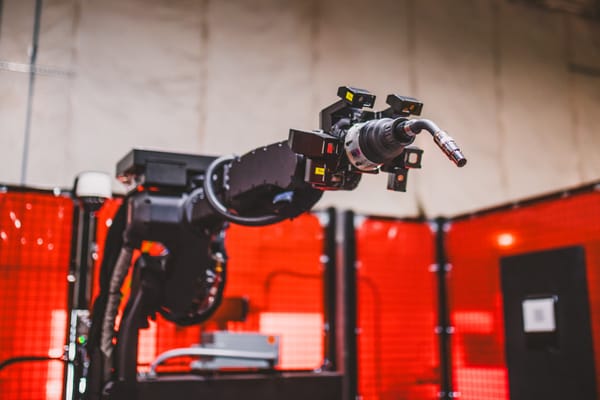
"I'm really excited to see continued automation that combines artificial intelligence with robotics. Ohio's strong industrial base and talent pool position it to lead in deploying these systems at scale. Companies like Path Robotics and Anduril demonstrate how smart machines can transform advanced manufacturing, defense, and logistics, creating new opportunities for productivity and high-skill jobs. This new industrial revolution will transform the Rust Belt." – Lynn Sautter Beal, VP, Consumer Lending Operations, Upstart
7. Applied AI as Infrastructure in Regulated Industries
"Applied AI, particularly in regulated and research-driven industries, will have the biggest near-term impact in Ohio. We're seeing momentum where AI is being integrated into healthcare, life sciences, manufacturing, and enterprise workflows – not as experimentation, but as infrastructure. Ohio's strength lies in pairing advanced technology with deep industry expertise, positioning the region well for practical, scalable adoption." – Kristy Campbell, President and COO, Rev1 Ventures
8. AI Implementation and Organizational Disruption
"The implementation of artificial intelligence tools and the resulting disruption that organizations will begin to deal with. Workflows will be altered, tech investments will shift, and workforce skilling will need to be a focus to maximize the investments." – Miro Humer, Vice President and CIO, Case Western Reserve University
These leaders point to a consistent reality: Ohio's AI opportunity isn't about being first to adopt the newest models, it's about being thoughtful in deployment. The state's advantage lies in its deep industry expertise, from healthcare and manufacturing to logistics and education.
Organizations here understand that successful AI adoption requires more than impressive demos. It demands security and compliance in regulated environments, infrastructure capable of supporting energy-intensive systems, workforce training to manage disrupted workflows, and products built for customers rather than hype cycles. As AI moves from experimentation to implementation, Ohio's practical, execution-focused approach may be exactly what sets the region apart.
This article is part of The Blueprint: Insights from Ohio Tech Leaders, an exclusive editorial series from OhioX and Ohio Tech News showcasing the people and ideas shaping our state's tech sector. This invitation-only platform features curated perspectives from the state’s most influential technology executives and innovators. To learn more about this series or to inquire about future partnership opportunities and inclusion, please submit your interest.