Path Robotics raises $300M at $2.45B valuation to scale physical AI for manufacturing
Annual recurring revenue grew 17-fold over 18 months as the Columbus startup added industrial deployments. Customers include HII, Lockheed Martin and Saronic, while a $600 million performance-based shipbuilding agreement and plans to reach 400 employees by year-end underscore its growth.

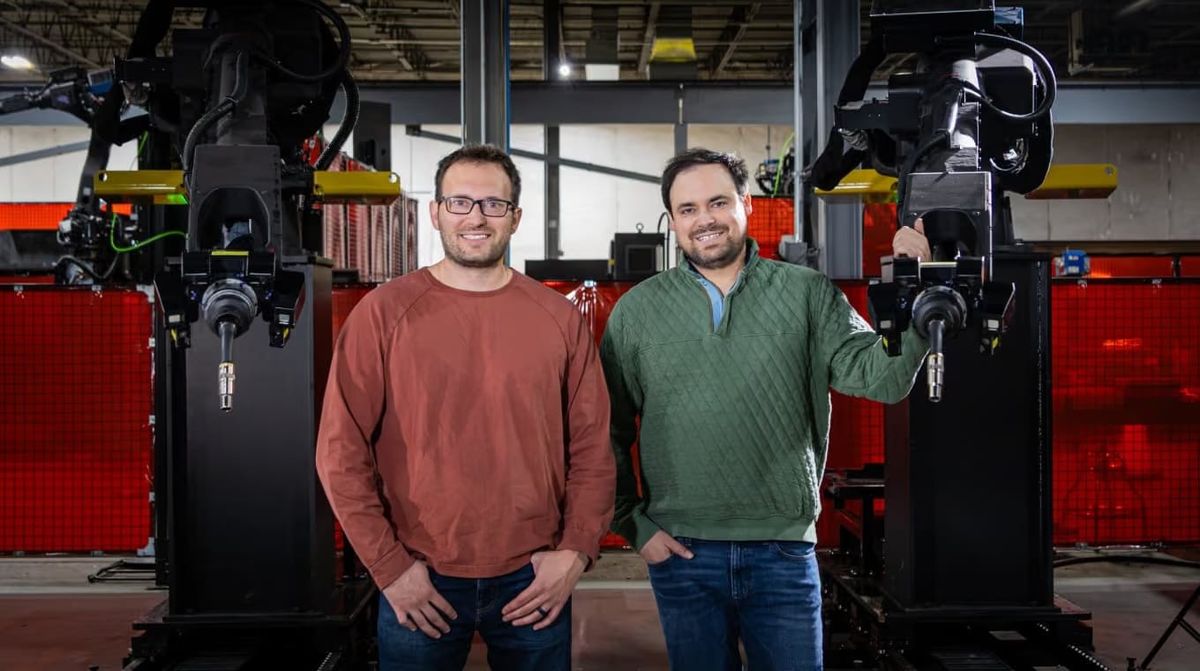
Columbus-based Path Robotics has raised $300 million in Series E financing at a $2.45 billion post-money valuation to expand its robotic welding business and bring its artificial intelligence technology to more manufacturing tasks.
AI-focused growth equity firm Georgian led the round, announced Nov. 10, with participation from existing investors including Drive Capital. The financing brings Path’s total funding to more than $610 million since its founding in 2018, according to the company. Georgian partner Emily Walsh will join its board of directors.
The investment follows rapid commercial growth. Path said annual recurring revenue increased 17-fold over the past 18 months as it expanded deployments among industrial customers across North America.
The new capital will support additional deployments, development of new robotic platforms, and increased investment in computing resources and AI model training. In a LinkedIn post, CEO and co-founder Andy Lonsberry said Path plans to begin expanding its technology beyond welding into other production-line tasks in 2027.
“Our goal isn't to automate one step, but to automate the entire factory,” Lonsberry said in the announcement.
Scaling across shipbuilding and heavy industry
Path’s expansion targets a production challenge: manufacturers with demand for more products but limited capacity to build them.
The company develops physical AI—technology that enables robots to perceive their surroundings and adapt their actions to changing conditions. Its initial focus has been welding, where variations in parts and joints can make conventional, preprogrammed automation difficult to deploy.
Path said its customers include HII, Lockheed Martin and Saronic, along with manufacturers such as EK Machine, Millerbernd Manufacturing Company, TransAmerican Power Products and TYCROP. Its target industries include shipbuilding and defense, heavy equipment, and energy infrastructure.
Earlier this year, Path announced a $600 million performance-based production agreement with HII to accelerate deployment of its technology across U.S. Navy shipbuilding programs. That agreement is separate from the equity financing announced Nov. 10.
To support growing demand, Path said its workforce has increased 97% year over year, with plans to reach 400 employees by the end of 2026.
Taking its AI beyond welding
At the center of Path’s technology is Obsidian, a physical AI welding model that uses real-world production data to help robots identify weld joints, plan and execute welds, and adapt to changing conditions, according to the company.
Path recently introduced Rove, a mobile welding system that pairs Obsidian with a four-legged robot. The system is designed to bring welding capabilities directly to a part rather than requiring the work to take place inside a stationary robotic cell.
The funding will help Path extend its technology to additional robotic platforms and manufacturing applications.
Walsh said Path’s growing base of production data could help strengthen its technology as deployments expand, “The team has built a strong foundation in welding, and we see enormous potential for Path Robotics to extend that intelligence to new manufacturing applications and industries."
Other participants in the financing included existing investors Addition, IronArc Ventures, Tiger Global, and Yamaha Motor Ventures and its affiliates, along with D. E. Shaw Ventures and NAVER Ventures.
From an Ohio garage to the factory floor
For Lonsberry, the production problem has roots in his family’s Ohio manufacturing experience.
In his LinkedIn post, he said he learned to weld at age 8 in the family garage. His father later turned that garage into a manufacturing company in Warren, where Lonsberry saw firsthand the challenges of building a U.S. manufacturing business.
Before starting Path, Lonsberry said he and fellow co-founder and brother Alex Lonsberry spoke with more than 100 U.S. manufacturers. They repeatedly heard the same concern: backlogs were growing, but production was not.
“The challenge wasn't product demand. It was production,” he wrote.