Stack Health wants to blow up the way Americans get health insurance. It's starting in Ohio.
Beam Benefits founder Alex Frommeyer is back with Stack Health, a Columbus-based startup aiming to upend the U.S. insurance market. By shifting coverage from employers to individuals, Stack uses AI to help Ohio workers build personalized, cost-effective health bundles.

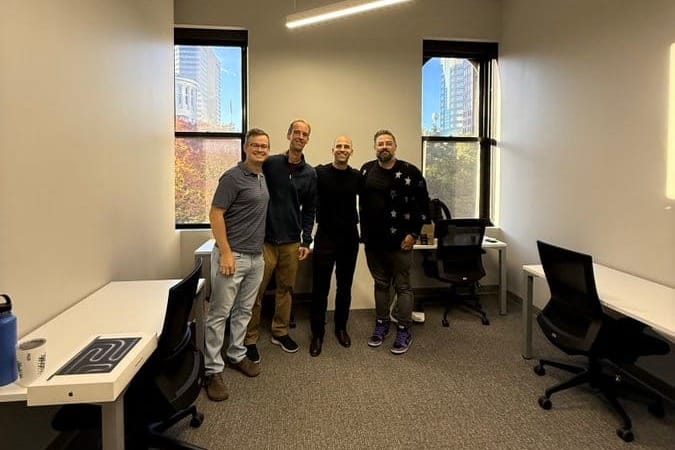
Alex Frommeyer spent 13 years building his first company. He started Beam Benefits as a college undergrad in Louisville with a wild idea about smart toothbrushes and dental insurance, grew it into a platform that he says now serves about 25,000 employers across more than 45 states with hundreds of millions in annual revenue, then handed the keys to a longtime board member and walked away. Not because it wasn't working. Because something bigger was eating at him, a problem he'd spent over a decade circling but never tackling head-on.
This spring, the Columbus-based founder is launching Stack Health, a startup built on a single provocation: what if the fundamental unit of American health coverage shifted from the employer to the individual?
"I was very adjacent to that problem building Beam, but I wasn't able to attack it right on the nose," Frommeyer told OhioTechNews.com. "The opportunity to have a great steward to take over and continue to grow Beam while I take a big swing at completely upending and rebuilding the healthcare coverage and cost ecosystem is an opportunity I couldn't pass up, and I believe the window truly opened for this business in just the past 6 months."
The scale of what he's chasing is hard to overstate. U.S. healthcare spending hit $5.3 trillion in 2024, according to CMS, accounting for 18% of GDP and growing faster than the economy itself. The average family premium for employer coverage reached nearly $27,000 in 2025, according to KFF. Rural hospitals are shuttering, and one recent analysis estimated that more than a third of U.S. hospitals are losing money. Health insurance premiums have consistently outpaced wage growth for years, squeezing employers and workers alike.
"We are $38 trillion in debt as a country, it's growing fast, and we have a lot of competing programs we have committed to spend our tax dollars on," Frommeyer said. "Healthcare is arguably the fastest growing component. I'm very fearful that if we don't have basically all of our best brains working on how to curtail healthcare spend and better optimize it, we are going to end up having a severe debt spiral issue as a country well within my lifetime."
Frommeyer calls Stack a "societal dividend" company: his term for a business that only works if it simultaneously creates enterprise value and measurable public benefit. He puts SpaceX and Tesla in that category. He wants Stack there too. Whether the market agrees is the fundamental bet he's making.
The Stack
The concept starts with a reframe. Instead of a small business owner shopping for a single group health insurance plan and hoping it somehow fits every employee on the payroll, the employer sets a defined contribution, an allowance per worker, and Stack then helps each individual build a personalized bundle of coverage tailored to their needs, budget, and risk tolerance.
That bundle is what Frommeyer envisions as their "stack." At the base sits an individual health insurance plan, typically from the ACA marketplace, focused on catastrophic protection, the car accident, the cancer diagnosis, the kind of event that could create financial ruin. On top of that, a member might layer a health savings account, a direct primary care subscription, dental and vision coverage, a wearable, a drug plan, or digital health tools. The composition varies person to person, which is the point.
"If your employer is giving you a gold-level plan but you really only need a bronze-level plan, then Stack will help you identify that, help you buy the bronze plan, and then take the savings and put it into an HSA," Frommeyer explained. "Or help you get a direct primary care subscription, products that might be of interest to you that your employer doesn't offer, because they're ultimately focused on trying to provide one insurance policy that covers the whole team."
One of the core inefficiencies Stack is targeting is the distribution chain. Getting a policy from a carrier to a human currently involves brokers, consultants, administrators, HR departments, and layers of bonuses and overrides that inflate costs at every link. Stack's model cuts through most of that by using the ACA marketplace as the distribution rail and positioning the employer as funder, not buyer.
The revenue model is simple. Stack charges employers a small monthly administrative fee to set up the program, then earns standard broker commissions when individuals purchase their base insurance plan. The company is also developing a proprietary product to help absorb surprise out-of-pocket costs.
Why Now
The defined contribution model Stack is built on, formally called an ICHRA, is not brand new, as Frommeyer is quick to point out. Adoption since its creation in 2020 has been modest, though growing quickly; estimates of covered lives range from roughly 500,000 to one million depending on methodology. Frommeyer says that ICHRA participation is growing about 50% year over year, and he's betting that a convergence of pressures is about to accelerate it further. Fully insured group plan costs are climbing steeply. He argues that in as many as 33 states, equivalent ACA marketplace plans are already cheaper than what small employers can get through group coverage. And according to KFF data, the vast majority of the smallest businesses still don't offer health insurance at all, not because they don't want to, but because the economics don't work.
There are real questions about whether the timing is as clean as the thesis suggests. ACA marketplace premiums face upward pressure heading into 2026, particularly because enhanced subsidies expired at the end of 2025. And asking workers to shop for their own coverage, even with Stack's tools, is a fundamentally different experience than receiving a plan from HR. Fro is betting that the tools, and the economics, have reached the point where that tradeoff is worth it.
For employers who don't currently offer coverage, the pitch is less about switching and more about finally being able to provide something. For the ones already absorbing annual renewal shocks, it's about predictability. An employer currently spending $750 per person per month on a group plan might set a $600 allowance through Stack, save immediately, and know that employees are getting more personalized coverage in return while not sacrificing quality.
Frommeyer is also making a much broader argument about freedom. When individuals own their coverage, they're no longer locked into jobs because of access to health insurance. Freelancers and contractors can participate in the same system. More small businesses can start and scale.
"I believe deeply that startups and small businesses are the best way to grow employment and opportunity for people," he has written on his Substack. "I want this sector to thrive."
And as healthier, working-age people move from overinsured group plans into the individual market, the risk pool improves and prices should fall; a flywheel that, if it materializes, could reshape the landscape.
The AI Angle
Frommeyer draws a parallel between today's AI moment and the early smartphone era when he first started building companies around 2010.
"Everybody was incredibly excited about building apps, and nobody really knew how to build them or what to build," he said. "Sounds very familiar, right? There was a new platform called mobile; today it's a new platform called the LLM."
The leverage is changing not just how companies are built but who's willing to build them. "The level of fun is going way, way up. I know a lot of people getting back in the game because they're having so much fun building. It's really getting the creative juices flowing, which I think is really good for the macro economy."
But the bigger AI play is in what Stack's members will experience. The company is building agents designed to help people navigate the part of healthcare everyone finds maddening: actually using it.
"Suppose I go to the doctor and they say I should schedule a knee MRI," Frommeyer said. "They'll recommend where to get it. But normally, shopping around is really hard. You've got to Google around, call a bunch of specialists, figure out the price. So you probably just don't do it. You just take your doctor's advice." With a Stack agent, he said, "you can send the agent to make a bunch of calls for you and figure out the best options, both cost and convenience-wise. And that's a relatively cheap thing to do given the cost of deploying an agent today."
He believes that kind of care navigation will eventually expand from expensive procedures down to routine needs as the dataset grows and agent deployment costs continue to fall.
Launching in Ohio
Stack is hunting for its first 100 small business customers in Ohio, with a focus on Columbus, ahead of a launch this summer. Interested businesses can join the waitlist at stackhealthcare.com. The ideal early adopter is a company with fewer than 50 employees. It’s likely a business where the owner is fielding insurance questions and doesn't have answers.
"These are employers that are frustrated with insurance renewals every year, frustrated with the cost, frustrated with their employees always asking them their healthcare questions," Frommeyer said. "And they're thinking, I don't know, I'm just like you, I'm trying to figure out what deductibles and copays are and how all this stuff works. I'd rather just give you some money and make sure you're taken care of."
But he's quick to clarify that Stack isn't just handing employees cash and wishing them luck. "Businesses want to be able to do it in a way that they know their employees are taken care of, and they’re not just throwing money at their team and telling them to figure it out. Stack is that solution."
It's a big swing for a company that hasn't served its first customer in a notoriously tough vertical. The company has not announced a funding round but says it is well capitalized. But Frommeyer has started from zero before, in the Midwest, in an industry that doesn't move fast, with a bet that the system could be rebuilt from the edges. He did it once over 13 years. Now he's trying to do it again, faster, on an even harder problem.
"Part of subscribing to American culture," he wrote in a recent essay on his Substack, "is believing that things will get better in the future, but only if we strive for these improvements in the present."
Learn more about Stack at www.stackhealthcare.com