AT&T fiber project nears finish line in East Cleveland
Backed by a $6 million municipal, state, and corporate funding model, crews are completing the remaining line work before year's end. Alongside the network upgrade, local outreach programs and digital literacy courses have already delivered hundreds of laptops to local families.

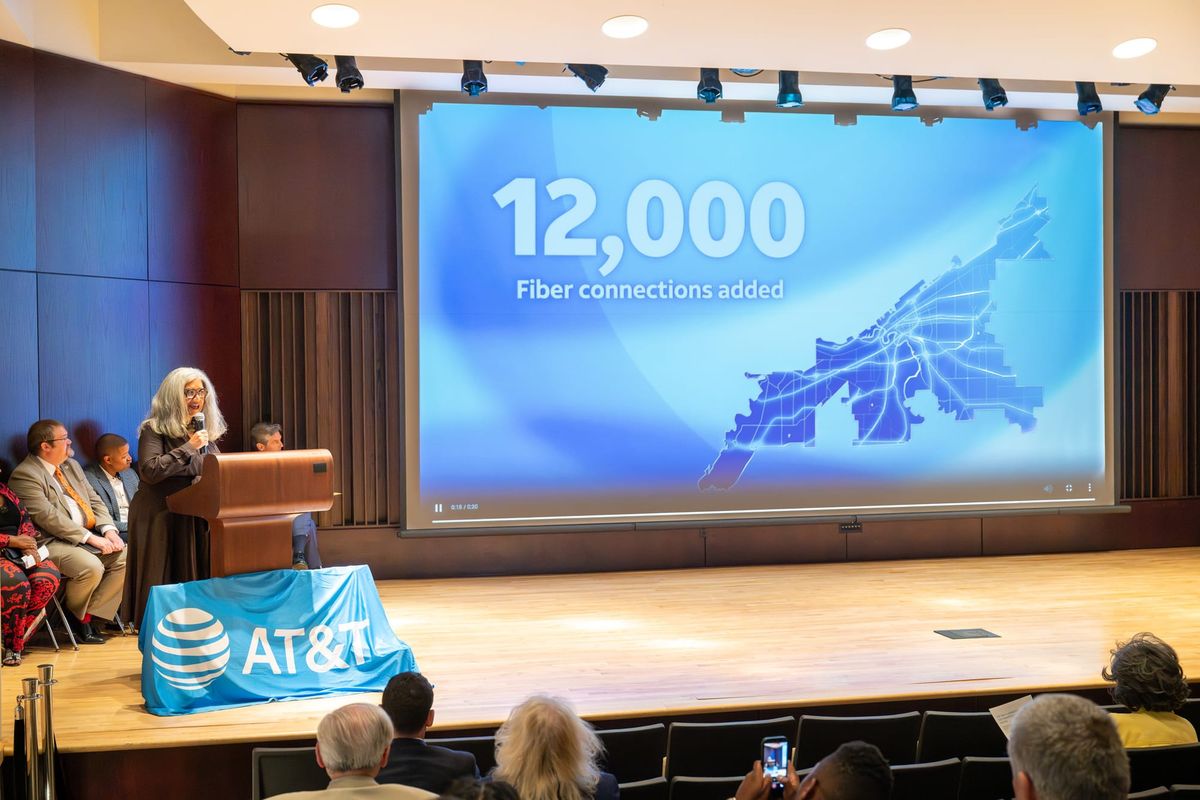
East Cleveland is on track to have fiber internet reaching more than 12,000 homes and businesses by the end of the year, the result of a nearly $6 million public-private partnership that AT&T reports is now close to 80% complete.
The build-out, announced at the East Cleveland Public Library with Mayor Sandra Morgan, combines municipal, state and corporate funding to bring high-speed service to a community that has faced longstanding gaps in access. Under an agreement signed in December 2024, East Cleveland contributed $1 million in public funds drawn from the American Rescue Plan Act of 2021 (ARPA), while AT&T covered $3 million. Team NEO, the Northeast Ohio economic development organization, connected the project to JobsOhio, which facilitated a $1.9 million grant through its Ohio Site Inventory Program (OSIP) to support the fiber connection.
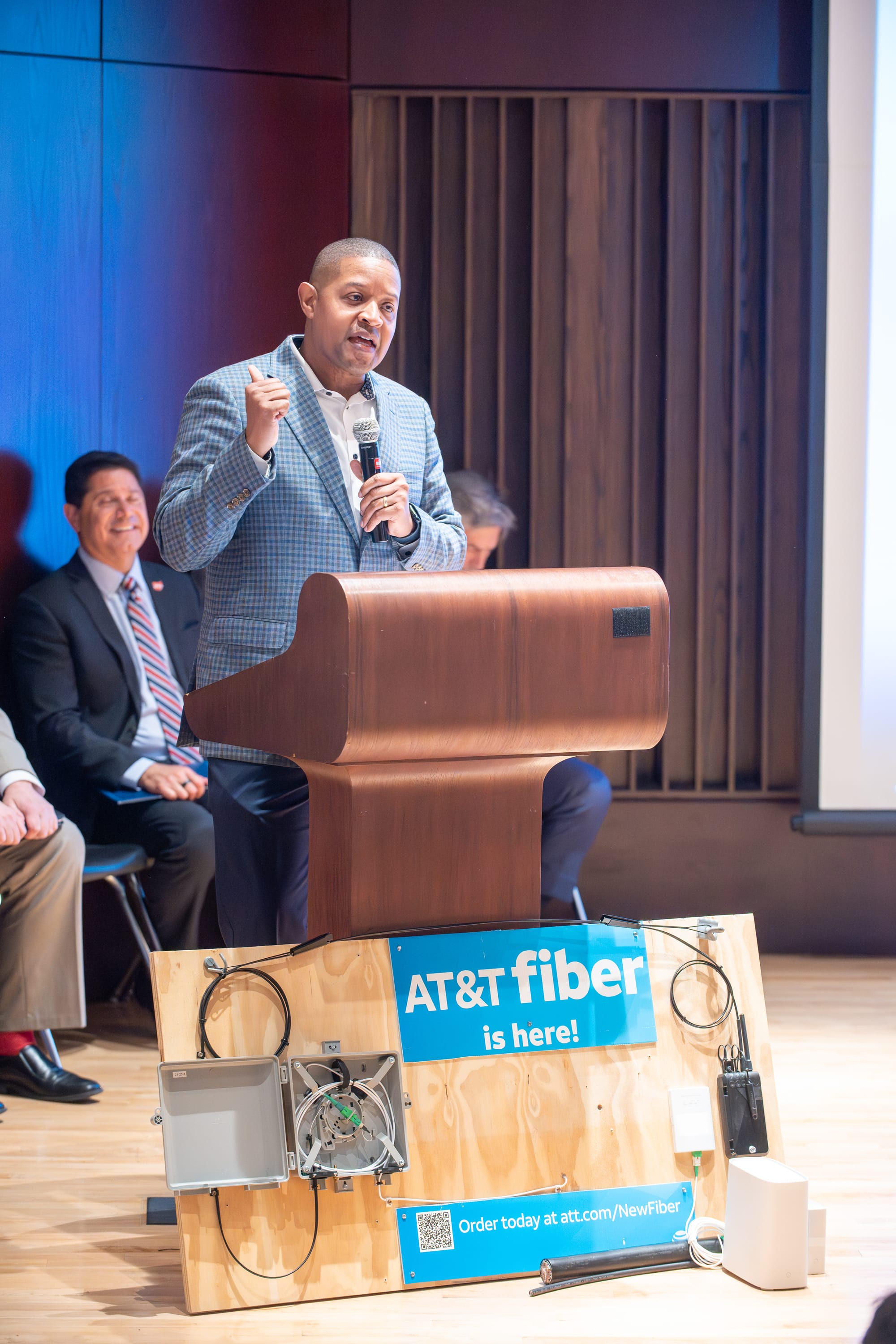
David Lewis, President of AT&T Heartland States, framed the investment as part of the company's broader case for connectivity as economic infrastructure. "The Mayor and community leaders in East Cleveland emphasized the power of connected technology as a path to economic and community growth," Lewis said, adding that expanding access in communities like East Cleveland helps strengthen infrastructure and create local economic opportunity.
Lewis pointed to the funding structure as a model for how such projects come together. "This project highlights the power of a good public-private partnership," he noted, crediting the combined contributions from the city, JobsOhio and AT&T along with the work of local officials and community members.
That collaboration builds on an existing relationship. AT&T Ohio has worked with JobsOhio and Team NEO for years, and the company described the East Cleveland project as a continuation of that partnership rather than a standalone effort. Cross-organization work of this kind, Lewis explained, is central to giving more Ohio residents and businesses access to fast, reliable internet.
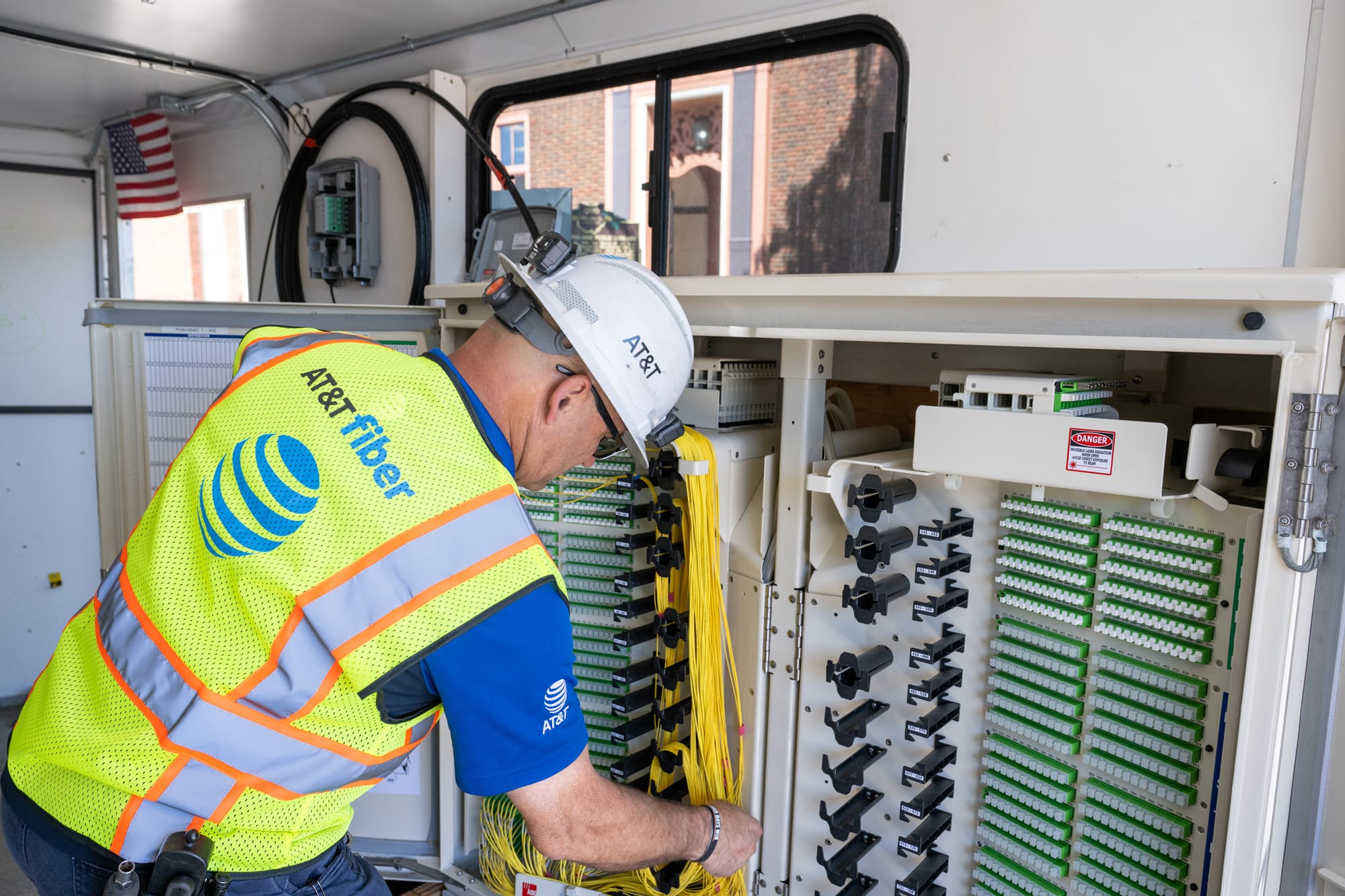
Construction and engineering crews are continuing to run fiber to the remaining locations, with completion expected before the end of the year. As of this summer, the project is nearly 80% finished and moving at a consistent pace, Lewis said.
On the ground, the rollout has leaned on coordination with the city to keep residents informed. AT&T has notified neighborhoods of ongoing work and their eligibility to sign up for the new service, and company representatives have taken part in the mayor's town hall meetings to make residents aware that AT&T Fiber is available in their area.
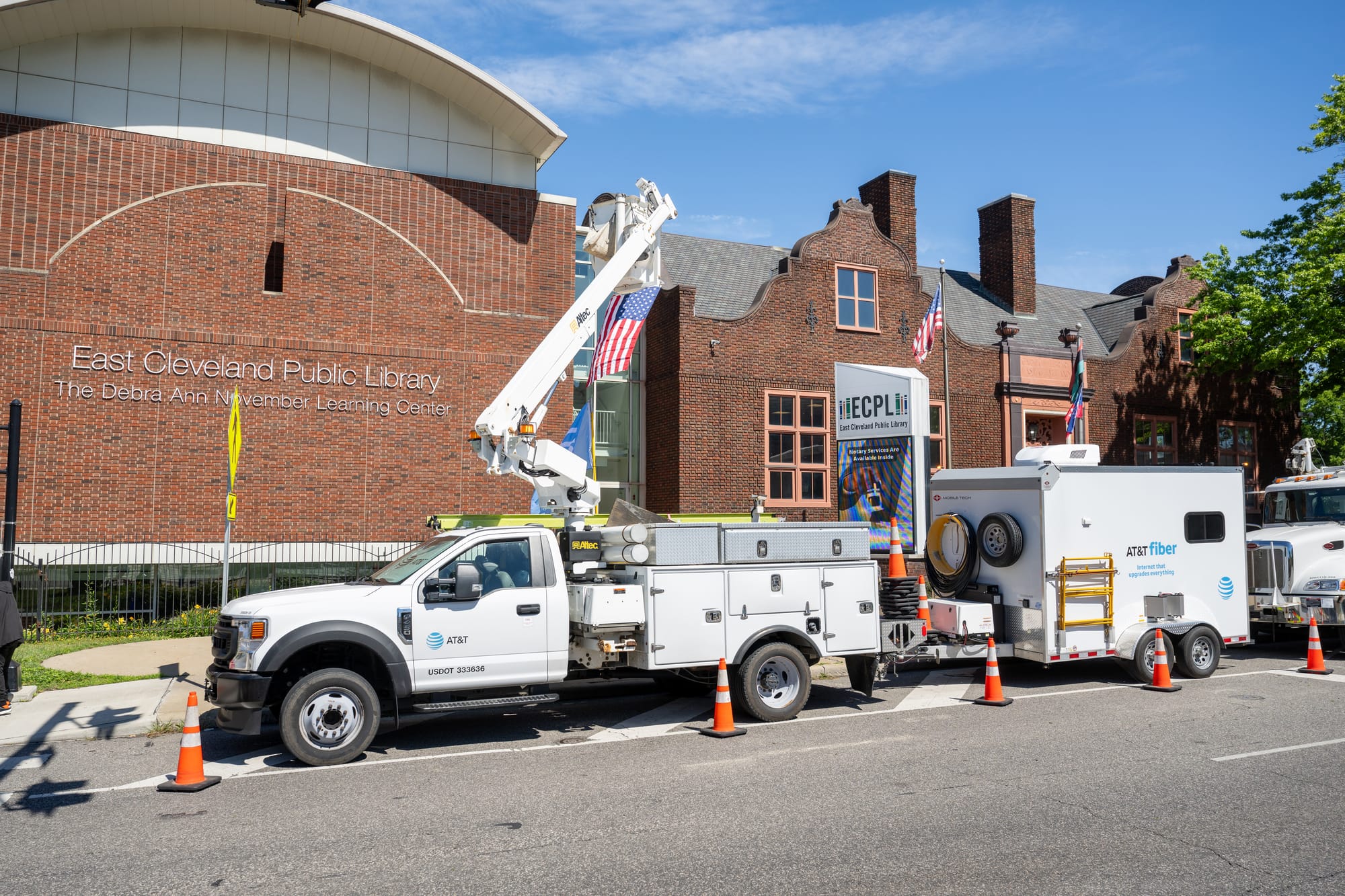
The build-out has come paired with a digital literacy component. Working with nonprofit partners, AT&T has provided 100 laptops to East Cleveland residents since December 2025, Lewis explained. The devices went to residents who completed digital literacy training courses at the East Cleveland Public Library.
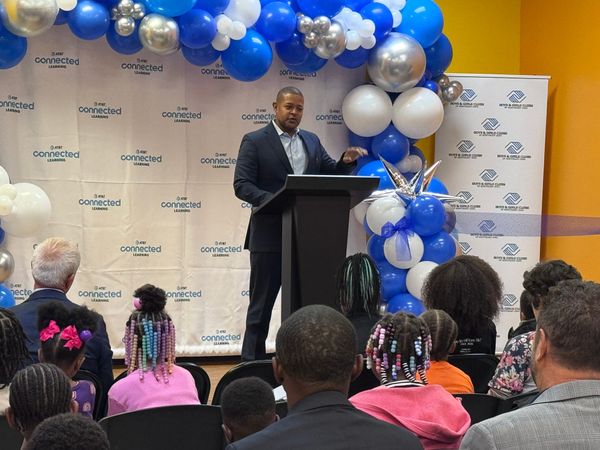
The East Cleveland effort sits within a larger set of digital equity investments AT&T has made across the state. Over the past few years, the company has contributed more than $2.1 million to organizations focused on closing the digital divide in Ohio and has donated more than 4,500 laptops and devices to students and families. AT&T has also opened three Connected Learning Centers in Cleveland and Columbus, offering free internet, Wi-Fi and devices, with a fourth center set to open in Akron early this fall.
Lewis tied those efforts back to the reasoning behind the East Cleveland investment, describing modern broadband as essential to daily life and economic growth. Reliable connectivity, he observed, opens doors to online learning, telehealth, entrepreneurship, more efficient business operations and emerging technologies such as smart-city and internet-of-things applications.
For AT&T, the goal is to supply the infrastructure that lets residents and businesses take advantage of those tools. By modernizing its network in a deliberate, collaborative way, Lewis explained, the company aims to prepare East Cleveland for what comes next rather than leaving it tied to older technology.
With the fiber network expected to be complete within months, the next test will be adoption, as the city and AT&T continue working through town halls and neighborhood outreach to move residents from availability to sign-up.