Building Ohio’s quantum information sciences workforce | Part 2 of 3
From Miami University's software-focused degree and Cleveland Clinic partnerships to Ohio State's QuSTEAM initiative, state universities are training the next generation of technicians and researchers to build hybrid classical-quantum workflows for real-world industry.


By Dave Brewster
In part one, I expressed some thoughts on how quantum and classical computers differ and why I’m bullish on Ohio’s quantum future. But what about the workforce?
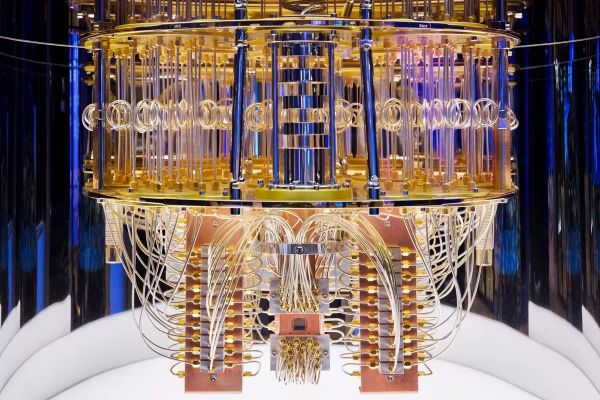
Quantum computers are operated very differently from classical machines at the hardware level, and the QPU itself has no operating system in the classical sense. The functions an OS would perform are handled by a classical control stack that compiles, schedules, calibrates, and corrects errors. For most organizations, though, quantum will be consumed as an accelerator alongside existing HPC and cloud resources. The real shift is in how problems are expressed: quantum algorithms work through interference and probabilistic sampling rather than step-by-step logic. Adoption is less about porting code and more about reformulating the problem, usually as a hybrid quantum-classical workflow.
Utilizing AI to collect data on the quantum information sciences offerings across Ohio colleges and universities, AI showcased two leading programs.
Miami University's B.S. in Quantum Computing (the first quantum computing degree in Ohio and one of the very first in the country to be primarily focused on the software side of the field) further strengthens the state's talent pipeline. The program (launched in Fall 2025 in partnership with Cleveland Clinic who have an IBM Quantum System One in their facility specifically for healthcare and life sciences) is an interdisciplinary program that draws on computer science, mathematics, physics and applied tracks in AI, cybersecurity, life sciences and bioinformatics, neuroscience, finance and physics. Students will get the opportunity to work with quantum algorithms and post-quantum crypto standards and will complete a number of senior design projects with industry partners. The end result is a cohort of graduates who are ready to take quantum computing and apply it to real problems in Ohio's healthcare, advanced manufacturing, finance and tech.
Ohio State’s undergrad and graduate programs. Ohio State's leadership of the NSF National Quantum Virtual Laboratory's Distributed-Entanglement Quantum Sensing program and its wider quantum networking and education activities are all aimed at building up local capability in the areas of sensing, simulation and hybrid classical-quantum workflows. Ohio State has the deepest research and graduate base, organized through the Center for Quantum Information Science and Engineering (CQISE), with about 42 faculty across six departments in Engineering and Arts and Sciences. That's all in addition to Ohio State's well-established strengths in polymers, specialty chemicals, aerospace and defense components, agricultural machinery and next-generation semiconductor supply chains to provide a very direct path from quantum algorithms to real-world industrial applications.
The Ohio State-led QuSTEAM (Quantum Information Science, Technology, Engineering, Arts and Mathematics). Its premise is that most of the future quantum workforce won’t hold PhDs, so undergraduate and two-year programs need a shared, modular foundation. QuSTEAM delivers a ready-made answer to the need for technicians. As posted on the QuSTEAM site, “The combination of high-quality, engaging courses and multiple tracks will allow for multiple pathways for students with a range of backgrounds and interests. This inclusive approach to curriculum design will provide substantial leverage for increasing the participation of underrepresented groups in QIST, a subfield that currently lags even the modest diversity standards of its parent disciplines. The close interaction with practicing scientists and engineers will also help students identify and engage with concrete career paths that help improve retention.”
Workforce development does not end there. Case Western Reserve University, Ohio University, Cleveland State University, Kent State University, the University of Dayton, Wright State University, Columbus State Community College, the Air Force Institute of Technology, and the University of Cincinnati. All offer contribution toward advancing the quantum information sciences field of study. In the coming years, as more Quantum Innovation Centers and use cases come to market in Ohio, I would imagine these programs are likely to expand.
Pathways for working professionals. Cleveland State University, the Ohio State University, Black Opal, Coursera, IBM, Microsoft, edX (University of Chicago), and MIT have options. Personally, I chose the MIT programs and recently ventured into IBM Qiskit and AWS Braket.
Dave Brewster is JobsOhio's Managing Director, Technology Industry. This is Part II of a three-part series, "Ohio: A Rising Star in Applied Quantum" by Dave Brewster. Up next in Part III: Why I am Bullish on Quantum in Ohio. Read Part I, Ohio: A rising star in applied quantum.