Chetan Kandhari on what it actually takes to scale AI at a Fortune 100
Nationwide’s Chetan Kandhari leads a $1.5 billion AI commitment, shifting the Fortune 100 from experiments to business-led transformation. By pairing innovation with rigorous governance, he’s embedding AI agents as "thought partners" to augment associates and scale responsibly.

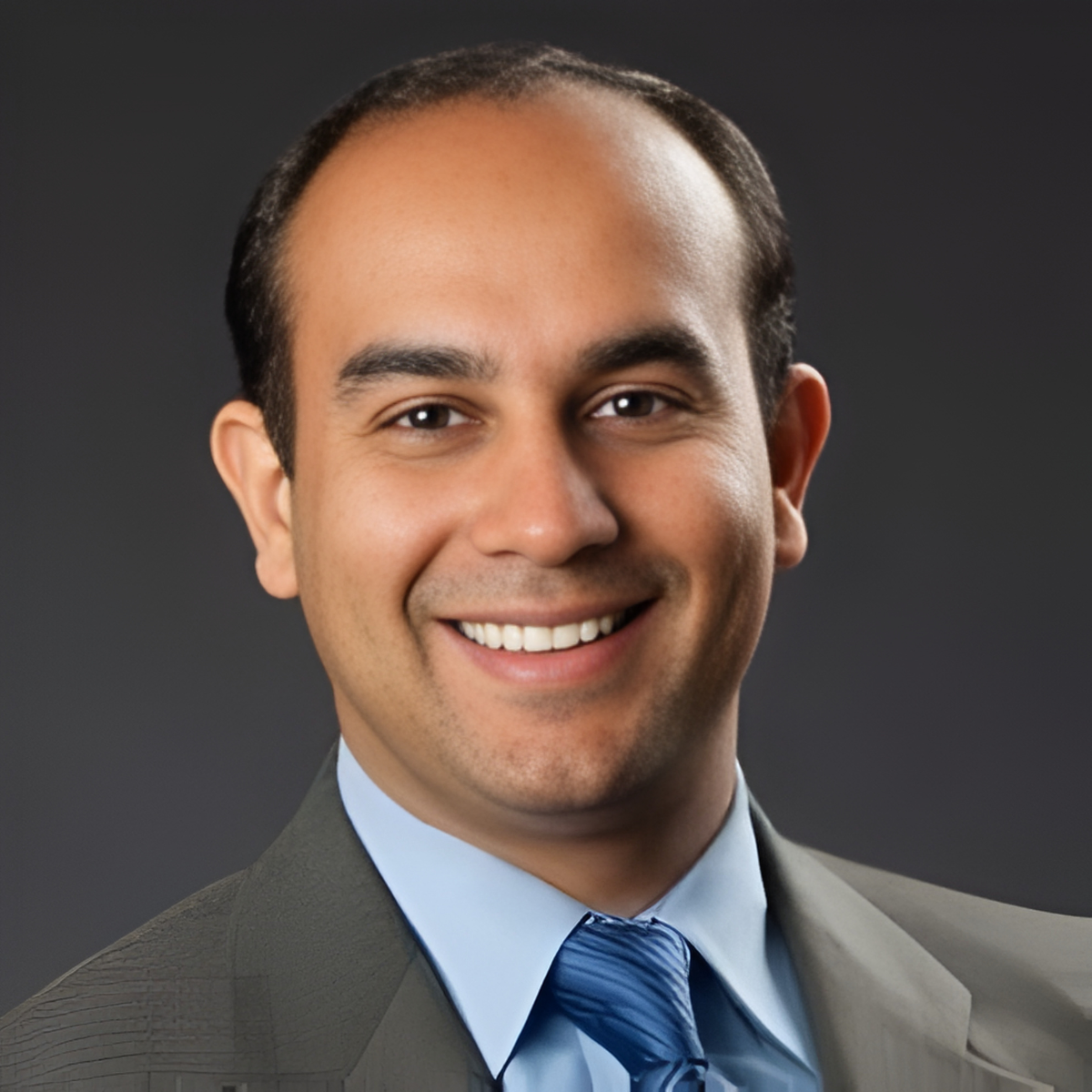
Chetan Kandhari has spent nearly two decades at Nationwide. In that time, he's overseen more than $1 billion in technology transformation before the company announced a $1.5 billion commitment to AI and digital investment through 2028. As SVP, Chief AI & Digital Transformation Officer, he leads the Enterprise AI & Digital Transformation Office — a team that partners across Nationwide to reimagine how one of America's largest insurance companies works, at scale.
He's one of the most credentialed enterprise AI executives in Ohio. He rarely talks about it in a local context. This is that conversation.
Building at Scale
When Nationwide announced its $1.5 billion technology and AI investment through 2028, the number made headlines. But Kandhari is quick to ground it in specifics.
"Since 2015, Nationwide has invested $5 billion in technology modernization," he said. The new commitment builds on that foundation, with more than 20% focused specifically on AI capabilities — going toward infrastructure and governance, workforce preparation through a Future of Work program, and AI-powered tools embedded across everyday work.
The philosophy behind where that money goes is deliberate. Kandhari describes Nationwide's approach as "people-connected and machine-enabled" — augmentation, not replacement. The question his team asks isn't whether a process can be automated. It's whether AI can help an associate get answers faster, handle routine work, and free up time for more complex decisions.
"At its best, AI should feel like a trusted partner to our associates, helping them move faster and smarter while keeping the human connection at the center of everything we do," he said.
That thinking also shapes how Nationwide has paced its AI deployment. After the emergence of generative AI in late 2022, the company built a cross-functional team and spent 2023 and 2024 scaling proof of concepts. Last year marked a deliberate turn.
"We made the strategic decision to move from isolated experimentation to business-led transformation with AI," Kandhari said.
Today, generative AI is a proven capability at Nationwide, and teams across the enterprise are building on shared foundations — approved models, data connectors, security and compliance controls. AI agents are the current frontier. The hardest part of the transition, Kandhari said, isn't technical. It's mental.
"The shift we've encouraged is from 'where can AI fit?' to 'what can I reimagine with AI?'"
In a heavily regulated industry, that kind of ambition requires an equally serious approach to governance. Kandhari co-sponsors Nationwide's Executive Steering Committee for AI alongside Chief Risk Officer Klaus Diem — an intentional pairing of opportunity and risk. Every AI project runs through responsible AI guidelines covering what data can be used, which models are approved, how outputs are monitored, and when a human must stay in the loop.
"We don't think about things like establishing risk guidelines as something that slows us down — we view it as an accelerator that allows us to scale faster," he said.
Ohio's Anchor
Nationwide has been headquartered in Columbus for 100 years. Kandhari sees that history as a responsibility that extends well beyond the company's own walls.
"Nationwide was born in Ohio, grew up in Ohio and we will continue to play a role in what comes next for Ohio," he said. The company partners with universities across the state for internships and entry-level hiring, with the explicit goal of keeping the next generation of Ohio tech talent here.
"We can help develop talent, create meaningful opportunities to apply new technology to real customer needs and show that innovation and responsibility can go hand in hand."
Kandhari is keynoting the Ohio Tech Summit on May 14 at the Ohio Union on the campus of The Ohio State University. His message to the room won't be about tools or infrastructure. It'll be about what actually drives transformation.
"This transformation is about mindset, just as much as it's about technology," he said. "The greatest value comes when AI is no longer treated as a chatbot, but as a catalyst to rethink how work gets done, how decisions are made and how we serve customers."
His goal: for every person in that room to leave viewing AI as a thought partner, not a feature.