Cintrifuse launches year-long residency with $300K for first-time founders
Cintrifuse has opened applications for its Emerging Founder Residency, a year-long Cincinnati-based program providing $300,000 in early-stage investment. Built for first-time, technically skilled founders, the residency offers a long runway, mentorship, and access to major corporations.


Cintrifuse is opening applications for the Emerging Founder Residency, a year-long Cincinnati-based program offering $300,000 in early-stage investment to founders working before product validation and before a funding round. Applications are open through June 5, with the cohort beginning in September 2026.
Cintrifuse is a Cincinnati-based startup catalyst and public-private partnership focused on building the region's tech economy by connecting founders with capital, mentorship, and corporate partners. Through Cintrifuse Capital, the organization has invested in nearly 50 early-stage companies, which have gone on to raise hundreds of millions of dollars in follow-on funding.
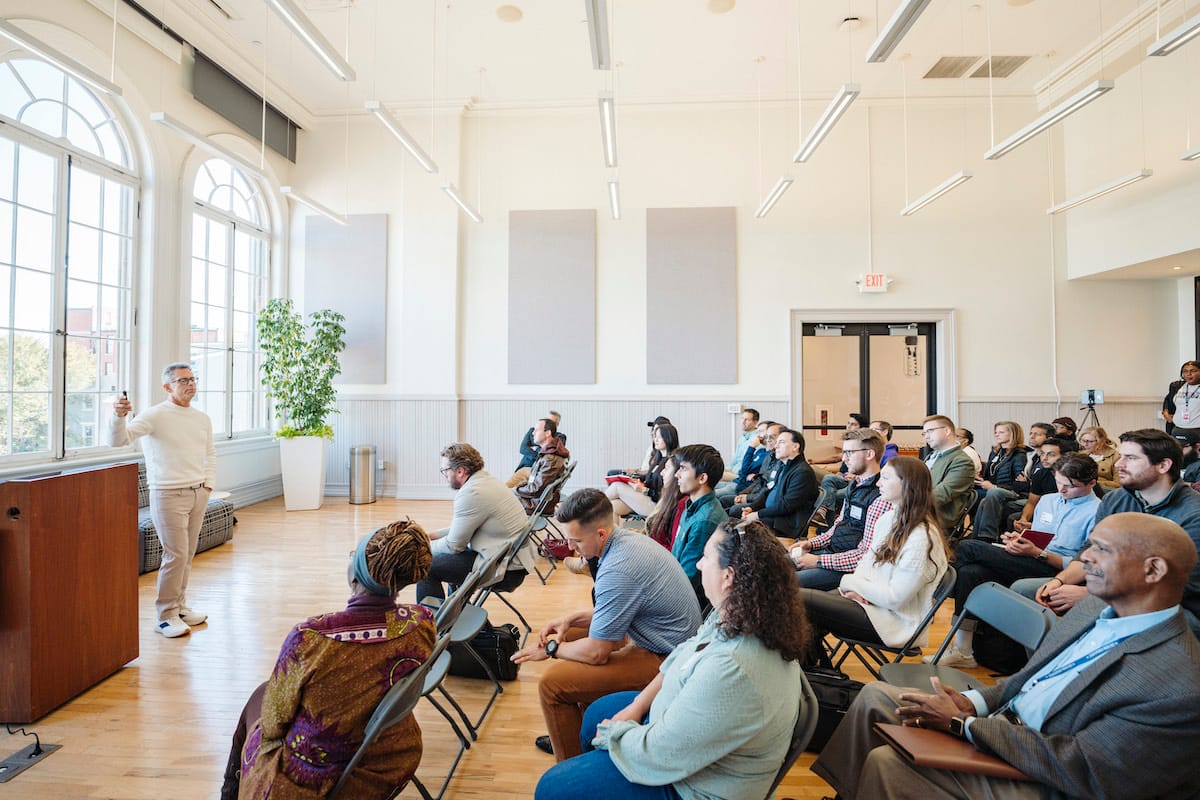
The Emerging Founder Residency is built for technically skilled founders at the earliest point of the startup journey — those with an idea, some research, and conviction, but no traction yet to evaluate. Selected residents will relocate to Cincinnati, work out of Union Hall in Over-the-Rhine, and commit to building full-time for the duration of the program. The curriculum includes weekly sessions, lunch-and-learns, and outside speakers covering forecast modeling, fundraising, customer profile development, go-to-market strategy, and using AI to operate more efficiently. Mark Wood, the Director of Startup Services for Cintrifuse, will run the program day-to-day.
J.B. Kropp, CEO of Cintrifuse and Managing Director of Cintrifuse Capital, said the $300,000 figure came out of looking at what early-stage founders actually need to reach a tangible outcome.
"We looked to see what else was out there across the country, and $300,000 gives a startup a really good chance and a long runway," Kropp explained. "When you're building your early-stage company, it often comes down to how long your runway is. We wanted to make sure these companies didn't run out of gas before their idea was realized."
Kropp believes the program reflects what Cintrifuse Capital's portfolio has shown about where founders most often stall.
"Sense of urgency is something we really focus on, especially in the world of AI," he noted. "The most successful founders are the ones who can receive feedback, digest it, and make business decisions on it. The best founders know how to pivot. They're not emotionally in love with their idea from day one."
He pointed to Cincinnati companies that pivoted two or three times before landing on the right idea, sometimes three or four years into building. The founders who don't make it, he observed, are the ones who get stuck.
"The ones that don't do well are stubborn. They stick to their idea," Kropp continued. "It might have been a great idea, but market dynamics shift. You need to be able to pivot based on what the marketplace is asking for."
At the application stage, Cintrifuse is looking for founders with high conviction and a defensible concept; not necessarily a product, but an idea that holds up to scrutiny.
"We're looking for someone who has an idea, done the research, and triangulated on a concept they want to build," Kropp described. "Maybe they have a little proof of concept, but they have high conviction they're going to solve a problem — something defensible, that can't be replicated with Claude Code in a couple of days."
The year-long structure and Cincinnati relocation requirement are deliberate. The residency is not designed to accommodate part-time builders.
"This is a great town to build a company, and if you're really serious about building something, you need to dedicate yourself for a year," Kropp emphasized. "This is not a side hustle. This is not a summer project. You want to be all in."
The curriculum's emphasis on AI reflects how quickly the economics of early-stage building have shifted. Kropp said the tools available now are reshaping how much capital a founder needs to reach revenue.
"Claude and AI tools allow startups to make their money go a lot further. They don't need to outsource to dev teams or hire a bunch of people," he observed. "Something that might have taken nine months to build now takes two weeks. The speed to revenue is so much faster than it was just two years ago."
Asked what a founder gets in Cincinnati that they wouldn't get in a denser market, Kropp pointed to access.
"You can get in front of just about any corporation in town. We have access to capital, we can help you hire people, we have marketing services and programming," he added. "To talk to P&G or Kroger or Fifth Third and get a meeting — we can make that happen. In larger cities, that's a little more challenging."
Applications for the Emerging Founder Residency are open through June 5, with the program beginning in September 2026. More information and application details are available at cintrifuse.com/emerging-founder-residency.