Cleveland's Augment Therapy takes top prize at Games for Change
The Cleveland company's ARWell PRO beat entries from 42 countries at this year's Games for Change Festival. CEO Lindsay Watson, a physical therapist of 25 years, built it around a problem she kept running into: most patients never do their home exercises.

Augment Therapy won Best in Health and Wellness at the 2026 Games for Change Festival in New York, taking the top prize in its category over entries from 42 countries.
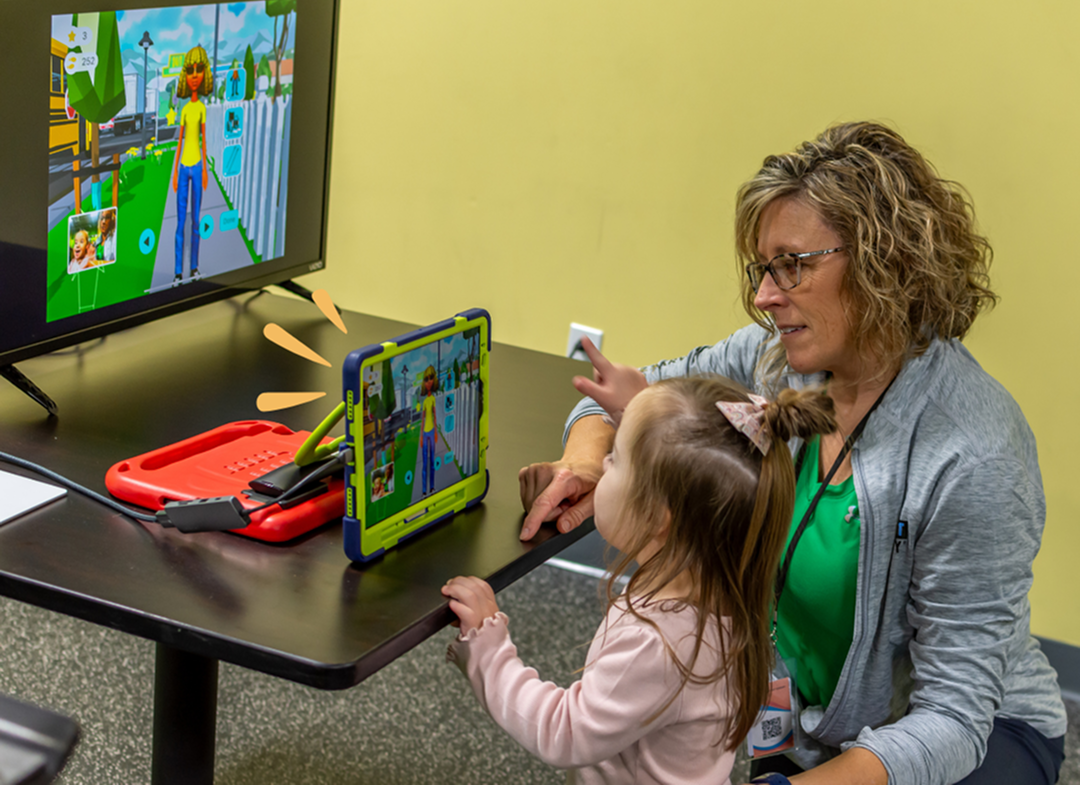
The Cleveland company's winning product, ARWell PRO, turns physical, occupational, speech and behavioral therapy exercises into augmented reality games. The festival draws independent game studios alongside companies including Disney, Roblox and Sesame Workshop. This was Augment Therapy's first year entering.
Judges pointed to the scope of what the company brought. ARWell PRO now includes more than 60 environments, along with features that make it usable for people in wheelchairs or with sensory processing challenges.
"So there was so much depth to what we had built that they said our product really stood out amongst the others," said CEO and co-founder Lindsay Watson.
A therapist's solution to the problem
Watson has practiced physical therapy for more than 25 years, and she traces the company directly back to that work.
"I am a physical therapist first and foremost," she said.
She started Augment Therapy after concluding that the populations she treated, children and people of all ages with disabilities, were being left out of health technology. Adherence was the core problem.
"When you tell an adult that's cognitively intact, go do three sets of 10 of that, the statistics show that less than 30% of patients actually go and do that," Watson said.
Add a physical or cognitive disability, she explained, and the gap widens.
"That task of telling them to go do three sets of 10 becomes an insurmountable task," she said. "And I wanted to just improve that."
Patients with chronic conditions often need therapy for decades, which compounds the problem for providers, who also struggle to capture data across clinics, schools, long-term care facilities and homes.
How the technology works
ARWell PRO uses full-body tracking rather than handheld controllers, which the company says lowers cost and removes a barrier for users with impairments.
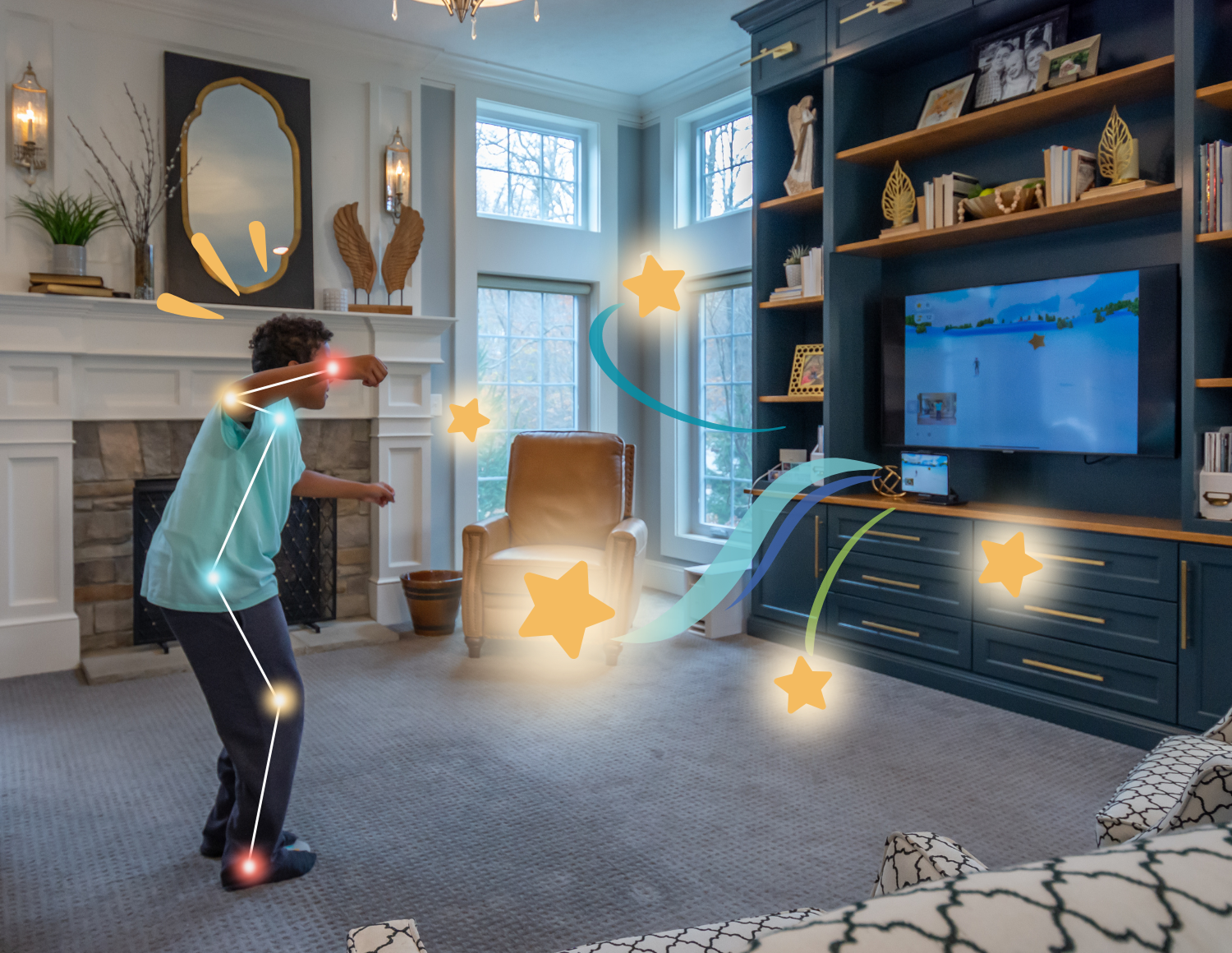
"All you need is your body to control the software," Watson said.
The software renders a digital world over a user's actual surroundings, or lets them embody a character. Musical instruments and animals appear in a family room, prompting the repetitive movements a therapist would otherwise coach through by hand. Characters from Sesame Workshop, a company partner, appear in some experiences.
"It becomes a lot more exciting to do that when Elmo is talking to you and feels like he's standing next to you in your family room versus me, a boring therapist standing in front of you, asking you to do it 10 times in a row," Watson said.
That is the whole design principle. "I like to say it's like we're hiding vegetables in technology," she said. The game around the exercises makes the work fun and engaging, removing the barrier that keeps most patients from doing it at all.
ARWell PRO is available only through a licensed therapist, who can prescribe it for use in sessions and at home. A consumer version, ARWell, is on the company website and in the Apple App Store with more than a dozen experiences built around coordination and balance.
Growth and Potential
Augment Therapy's largest customer is Nemours Children's Health. The relationship started when the company presented research at a conference, moved into a pilot and then into a commercial agreement. Augment Therapy has onboarded 130 physical, occupational, speech and behavioral therapists at Nemours, who use the software in inpatient and outpatient settings and for home exercise programs.
Three children's hospitals in Ohio use the software, with additional contracts under review, along with one international hospital, school systems and long-term care facilities. Watson said the reports coming back from those settings are of patients who once hated therapy now engaging in it.
"And that's just been the most rewarding thing to change lives in that way," she said.
Outcomes data specific to Nemours is not available yet, Watson noted, but the company has built a research base elsewhere. It includes two peer-reviewed journal publications, in Annals of Medicine and Physiotherapy Theory and Practice, a peer-reviewed conference publication, two scientific conference posters, a Yale doctoral dissertation and a clinical case study.
The Physiotherapy Theory and Practice case study examined a patient whose diagnosis resulted in toe walking, a pattern commonly seen among people on the autism spectrum or diagnosed with cerebral palsy. It paired the software with electrical stimulation electrodes placed on the leg muscles. Watson said the combination supported resolution of the toe walking over time while distracting the patient through the exercises.
Augment Therapy wants to expand its work with payers, arguing that therapy is a conservative, cost-effective intervention patients often skip before escalating to more expensive care. Watson said the company is also working toward acquisition, and that the longer-term goal is to be the musculoskeletal solution for special populations.
"We want to be the ones that people think of and go to when they're trying to provide for neurologic, pediatric, and complex chronic populations," Watson said.
Providers and wellness users can find subscription information at augmenttherapy.com. Watson can be reached at lindsaywatson@augmenttherapy.com for partnership or collaboration inquiries.
By the numbers
- 42: countries represented in the Games for Change field
- 60+: experiences available in ARWell PRO
- 130: therapists onboarded at Nemours Children's Health
- 25+: years Watson has practiced physical therapy
- Under 30%: share of patients who complete prescribed home exercise, per Watson
- 3: Ohio children's hospitals using the software, with more in contract review