From Dayton to the Big Apple: Dexa takes flight in the nation’s most crowded airspace
Dayton-based Dexa is tackling the FAA’s ultimate test: dense urban airspace. Partnering with Grubhub in New Jersey, the startup is proving its "airline" status alongside giants like Amazon. Backed by Ohio capital, Dexa’s pilot is the final hurdle before it targets the five boroughs.

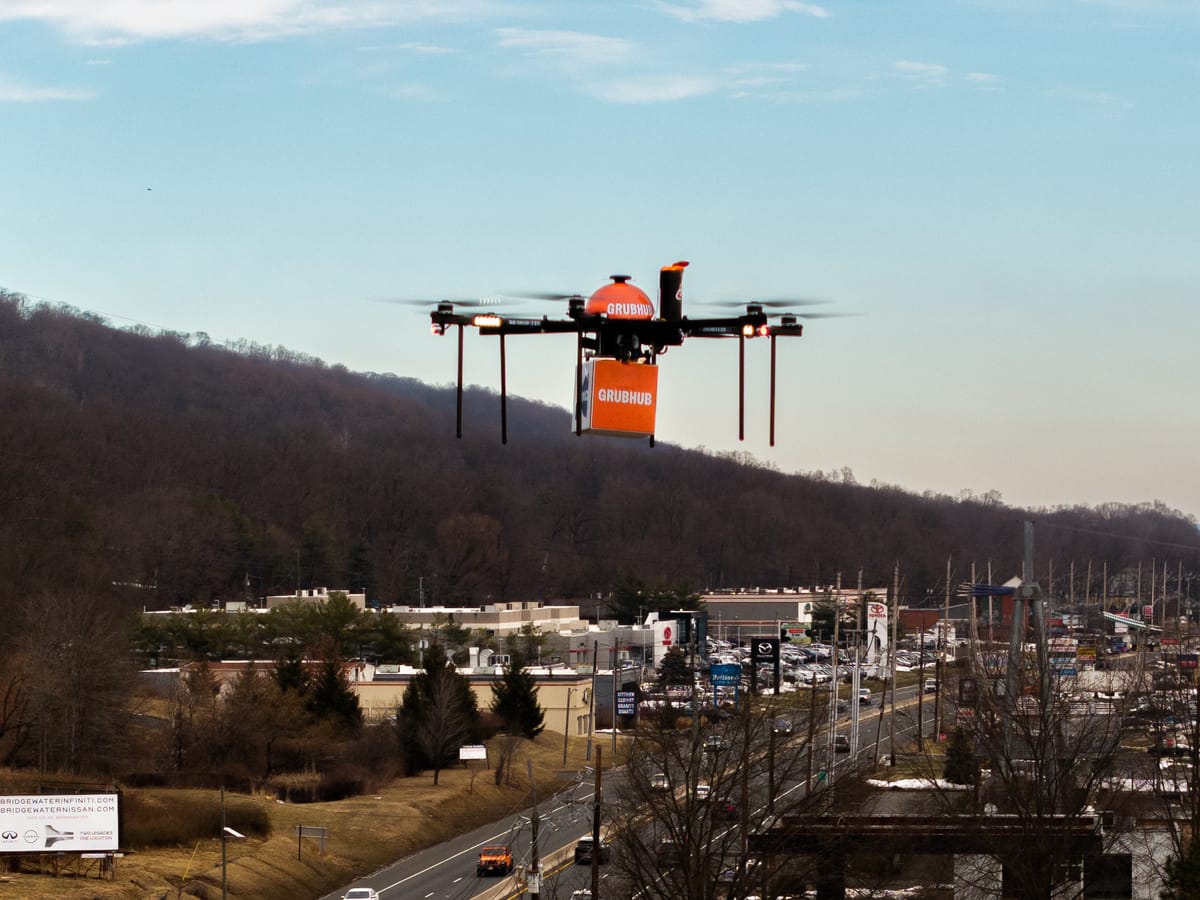
Dexa, a Dayton-based autonomous drone delivery company, launched its first Northeast operations this week in New Jersey, marking a milestone the drone delivery industry has spent years working toward: commercially licensed drone flights in dense urban airspace.
The three-month pilot, a partnership with food delivery platform Grubhub and food hall operator Wonder, went live March 18. Customers in the service area can select drone delivery through the Grubhub app and expect their order within 15 minutes of placement, tracked live through the app. No additional delivery fee applies during the test period.
The New Jersey location is deliberate. Most drone delivery testing in the U.S. has taken place in rural and suburban markets with relatively uncongested airspace. The New York metro region presents a different challenge entirely.
"There are three international airports in New York City," said Beth Flippo, Dexa's CEO and founder. "Being able to show that drones can operate in that same congested airspace with commercial air traffic is what the FAA wants to see."

Flippo was clear that the density people typically worry about — traffic, pedestrians, tight neighborhoods — isn't actually the regulatory hurdle. The airspace is. The New Jersey trial run is designed to generate the real-world data needed to eventually move operations into the five boroughs. Manhattan is the stated goal.
What makes Dexa's position in that conversation unusual is its regulatory standing. The company holds three FAA certifications that most drone operators have not been able to achieve simultaneously: an airworthiness certification for its U.S.-manufactured DE-2020 aircraft, a Part 135 Air Carrier Certificate — the same classification that makes a company an airline — and a national Beyond Visual Line of Sight waiver, allowing flights without a visual observer present for each flight. Only Amazon, Google's Wing, and Zipline hold the same combination. Dexa did it with 27 employees and $18 million raised, primarily from investors in Dayton and Southwest Ohio.
The trial run will test something Dexa couldn't replicate in smaller markets: volume. Each aircraft handles four deliveries per hour, operating within a 2.5-mile radius of the partner store at 40 miles per hour. What the team is specifically watching for is how systems hold up when a medevac helicopter lifts off nearby, how the queue manages when orders stack up simultaneously, and whether ground operations — currently still human-assisted for package loading — can move toward full automation.
Grubhub's driver network serves as backup for orders the drones can't complete.
Flippo's pitch for drone delivery goes well beyond convenience. She frames it as a structural correction for local retail. If a neighborhood store can deliver in 15 minutes, the economics shift. Dexa is not charging retailers to participate. The plan is eventually to charge consumers around $5 per delivery — and at sufficient scale, potentially move to a model funded by in-app advertising and sponsored products.
"We're not trying to replace a guy on a bicycle," Flippo said. "We're really trying to change the way we live and support our local stores."
Flippo, who began her career as an embedded software developer at her family's defense contracting firm in New Jersey, moved her family to Dayton in 2020 after landing Kroger as Dexa's first customer. She is now the first female CEO of a licensed unmanned airline in the United States — a distinction she credits less to individual ambition than to what she sees as a natural fit between women and an industry built on planning, safety, and coordination.
The company's aircraft are manufactured in Dayton. Dexa is currently expanding from a 5,000-square-foot facility into 15,000 square feet, driven partly by unexpected demand from defense — branches interested in on-base logistics rather than any weapons application.