Lead or be led by the AI revolution
Ohio Secretary of State Frank LaRose draws parallels to the industrial era, calling for automated government efficiency that roots out financial waste. Crucially, he warns that a shrinking public workforce could disrupt state pension funds if state leaders fail to plan ahead.

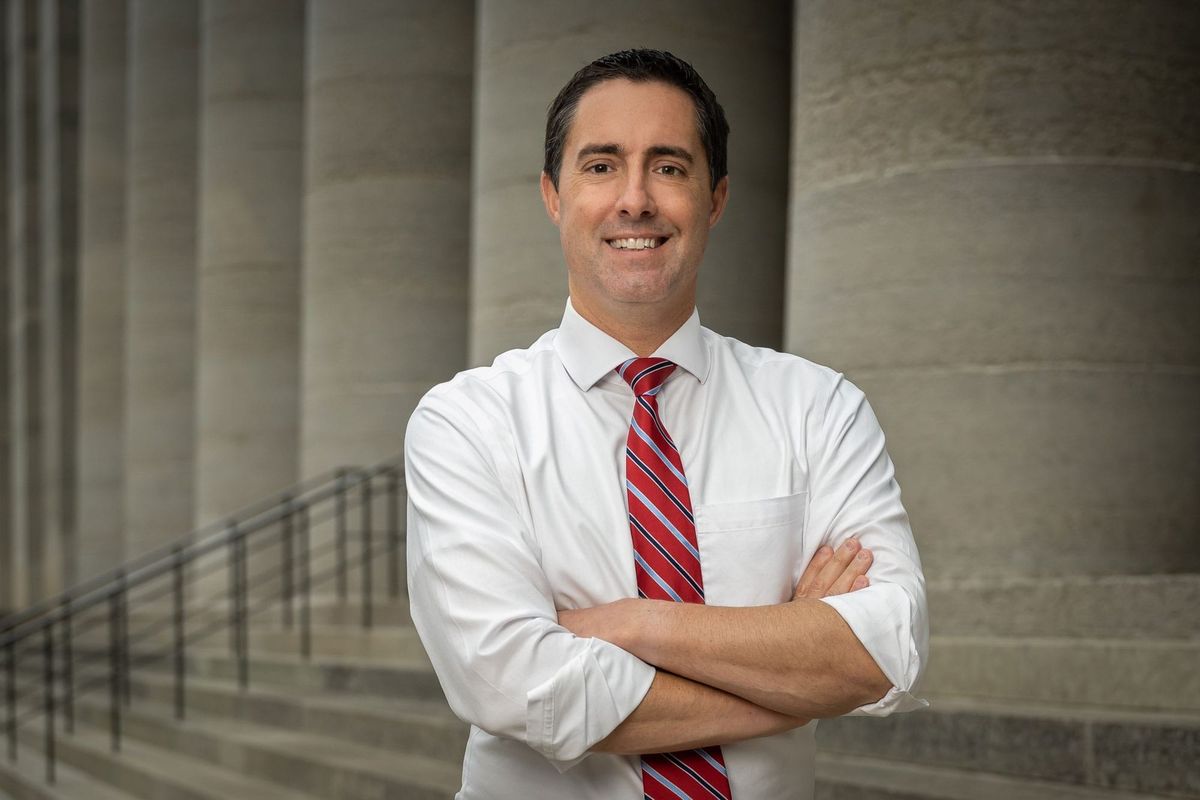
By Frank LaRose
More than a century ago, Ohio found itself at the center of a technological revolution that threatened an economy built largely around a farm animal. We had more than a million horses around the turn of the 20th century, hauling freight, working farms, and moving people. Then the automobile arrived.
As the car upended daily transportation and ushered in the modern economy, Ohio helped lead the revolution. Dayton inventor Charles Kettering developed the electric starter, making automobiles practical for millions of Americans. Harvey Firestone, son of my native home, Akron, built a tire company that drove the auto industry to the masses.
Their inventions and many others initially displaced jobs but ultimately transformed countless others, helping to create industries our predecessors could never have imagined.
At nearly the same time, Dayton’s Orville and Wilbur Wright were building another machine that would change the world. Ohio's history is filled with innovators who embraced the uncertainty of change and made life better.
We face a similar opportunity with the dawn of artificial intelligence.
AI could be one of the greatest tools taxpayers have seen in generations. The government processes millions of financial transactions and employs tens of thousands of people whose work is increasingly amenable to AI assistance. Used responsibly, this emerging technology could detect errors and anomalies, eliminate bureaucracy, drive effiencies and lower government costs.
We should embrace that opportunity, but we should also prepare for its consequences. Let’s begin with an important difference between Kettering's time and ours: the public pension. Ohio has made long-term pension promises to hundreds of thousands of public employees. So what happens if AI eventually allows government to operate with significantly fewer of them?
Consider the Ohio Public Employees Retirement System. The system’s solvency doesn't just depend on investment returns. It depends on payroll. Most employees contribute 10 percent of their salary, while employers contribute another 14 percent.
If a government office that once required 100 employees uses AI to work faster and more accurately, perhaps it now needs only 80 employees. That's potentially a great outcome for taxpayers, but those 20 eliminated positions no longer generate pension contributions.
Multiply that across state agencies, municipalities, universities and school districts in 88 counties, and the numbers begin to matter.
This isn't merely theoretical.
The School Employees Retirement System of Ohio already identifies declining payroll as a financial risk. What they now have to consider is whether AI could become a new driver of structural change in the workforce.
A potential crisis is looming, but it doesn’t mean it's inevitable.
A smaller, more productive workforce earning higher salaries could still produce a growing payroll, or AI might augment more employees than it replaces. We simply don't know. That's why we need to start asking the hard questions.
The consequences of this emerging technology are not all dire. Like automobiles and airplanes, Ohio can be a leader in the revolution.
We should start by using AI to root out waste, fraud and abuse. Government processes millions of financial transactions and maintains enormous amounts of data. AI can search those records for duplicate payments and unusual patterns that human auditors simply don't have time to examine individually.
We should also use AI to measure government performance, identifying programs that aren't producing results, contracts that consistently exceed estimates and projects where costs are rising faster than outcomes. This information can improve public transparency by allowing citizens to access real-time data that shows where and how their money is spent.
Finally, we can use AI to handle repetitive paperwork, data entry, and routine analysis, so public employees can spend more time solving problems that require human discretion and interaction. The potential is unlimited.
In the Army, we learned that military might comes from readiness. The artificial intelligence revolution is happening faster than we know, and Ohio can either lead it or be led by it.
I’ll work to ensure that human intelligence maximizes its potential for good.
Frank LaRose is Ohio’s 51st Secretary of State.