Miami University’s strategic investment in quantum computing — and the workforce behind It
The public Ohio school has launched the nation's only software-focused quantum computing undergraduate degree, partnering with Cleveland Clinic to build a workforce pipeline before the industry catches up

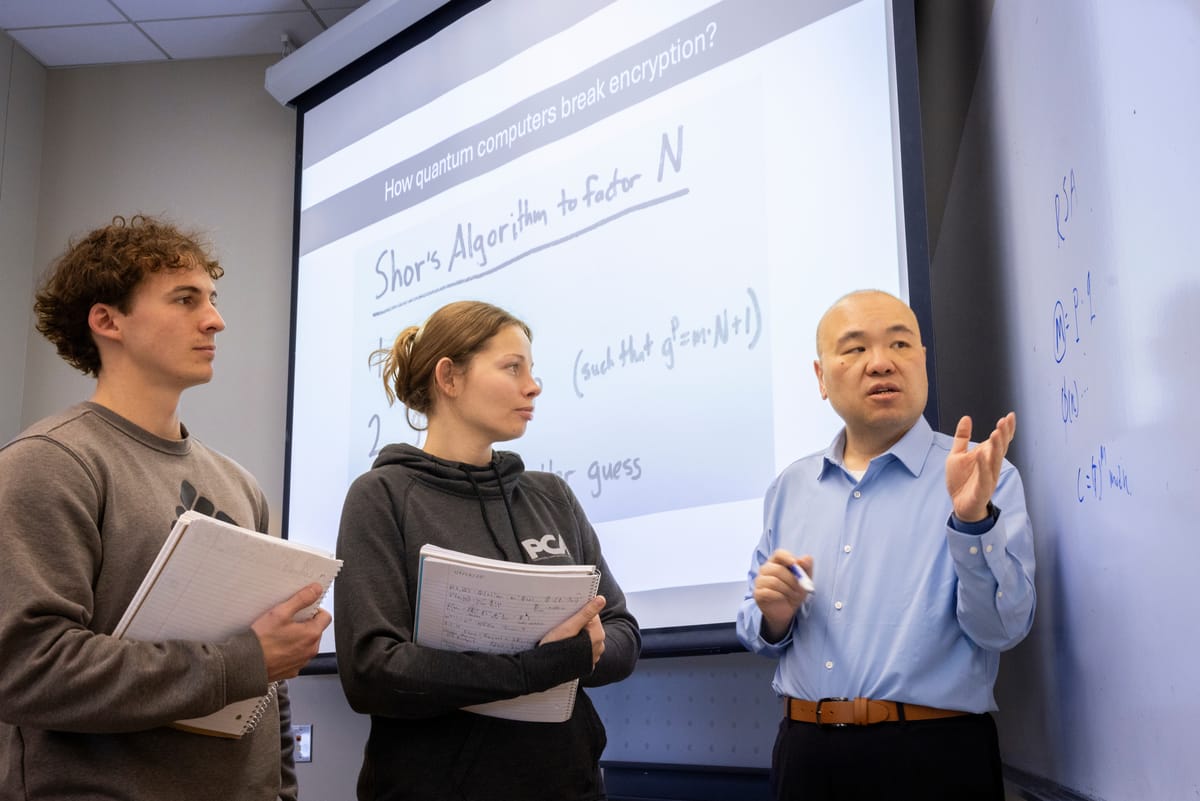
On a leafy campus historically known for its liberal arts focus, Beena Sukumaran and her team are building something new at Miami University.
Sukumaran, the Dinesh and ILA Paliwal Dean of Miami University's College of Engineering and Computing, has spent the past two years working with her faculty and leadership to assemble a program that most universities haven't attempted: a full Bachelor of Science in Quantum Computing, designed not around the physics of building quantum machines but around the software that will eventually make them useful.
The program, which enrolled its first students in August 2025, is the first quantum computing degree in Ohio and, according to the university, the only undergraduate program in the country focused specifically on the software side of the field. It was developed in collaboration with Cleveland Clinic and moved from board approval to enrollment in under nine months — fast by any academic standard and a signal of how seriously Miami's leadership views the opportunity.
"This degree program is poised to create a new generation of trailblazers that can apply advanced computational skills to solve the world's most challenging problems," Sukumaran has said of the initiative. It is a bold claim, but the logic behind it is straightforward: if quantum computing advances the way governments, health systems, and major technology companies expect, the constraint won't be machines. It will be people who know what to do with them.
The Software Wager
Much of the public conversation around quantum computing centers on hardware and the race to build more stable qubits, reduce error rates, and scale machines toward commercial viability. Miami is focused on the other side of that equation.
The 124-credit-hour program is organized around four pillars: mathematics and physics, fundamental computing, quantum computing, and a combined track spanning cybersecurity, artificial intelligence, and entrepreneurship. Students move through a structured sequence of quantum courses, from foundational concepts to advanced applications and post-quantum security standards, culminating in a senior design project with industry partners.
Each student also selects one of six applied specialization tracks — artificial intelligence, cybersecurity, finance, life science and bioinformatics, neuroscience, or physics — ensuring graduates leave with both quantum fluency and domain expertise in a sector where the technology is expected to have real impact.
The emphasis on software is a deliberate strategic choice. Hardware will continue to advance in corporate and government labs. But the algorithms, security frameworks, and domain-specific tools that make quantum systems valuable represent a different kind of problem — and one that a teaching university (with a strong research profile and close industry ties) may be well positioned to address.
Inside the Cleveland Clinic Partnership
What elevates Miami's program beyond curriculum design is its relationship with Cleveland Clinic, one of the world's leading academic medical centers. Cleveland Clinic is home to an IBM Quantum System One on its main campus, the world’s first quantum computer dedicated to healthcare and life sciences research.
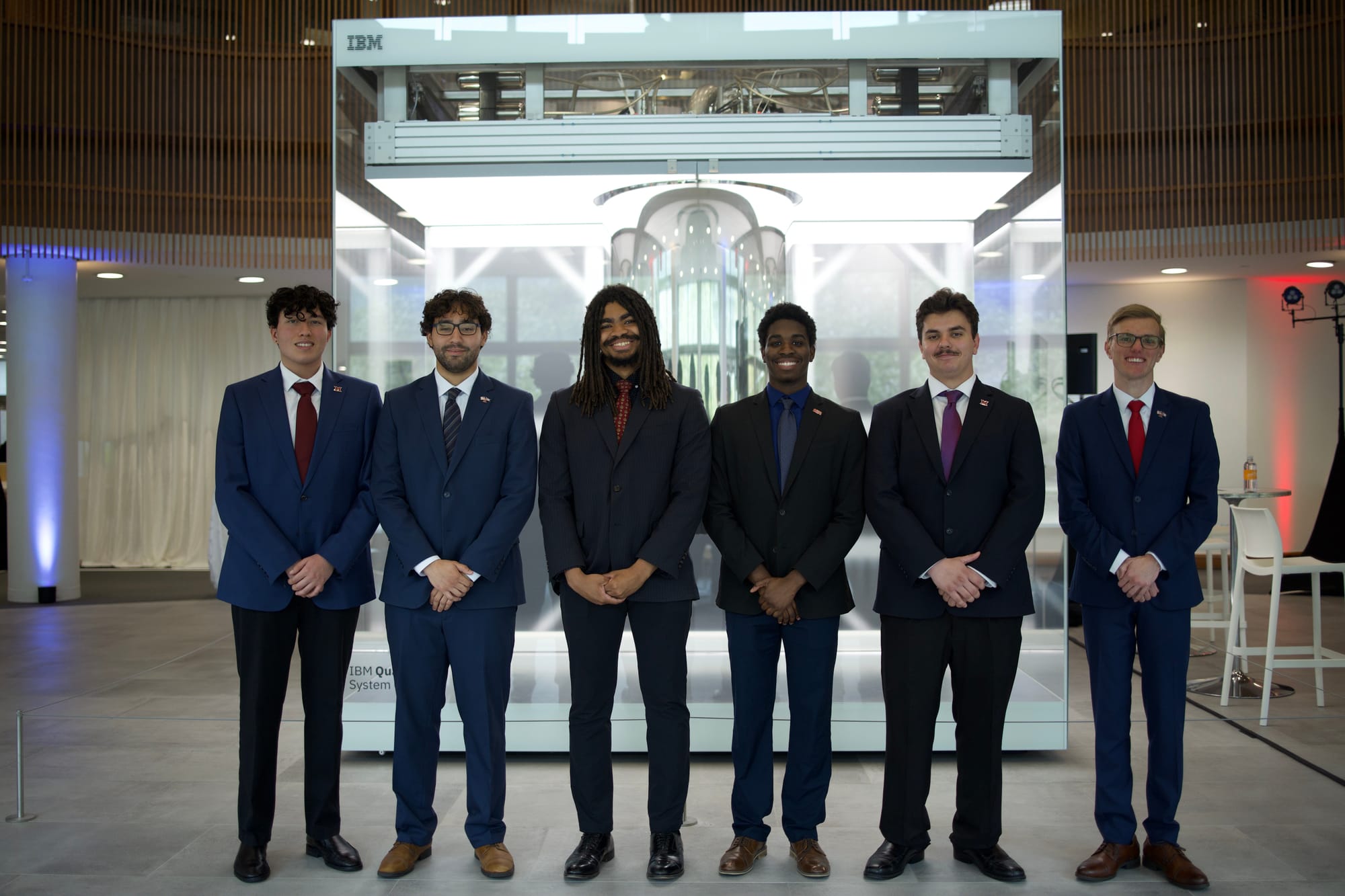
The partnership shaped the program from the ground up. Cleveland Clinic researchers provided input during curriculum development, helping connect theoretical coursework to applied problems in healthcare, drug discovery, and biomedical research. The collaboration also created a direct pipeline for students: Miami undergraduates can pursue summer internships at Cleveland Clinic, as well as access to the quantum computer itself, either virtually from Miami’s campus or physically at Cleveland Clinic.
For students in the life science and bioinformatics track, the connection is especially concrete, providing a path from classroom theory to one of the few places in the country where quantum computing is being tested against real clinical and research questions. For the program as a whole, it provides something harder to manufacture than a strong syllabus: credibility with employers and proof that the training maps to institutional need.
Building the Pipeline Earlier
Sukumaran and her team aren't waiting for students to show up as first-year students. Miami is building a pipeline that reaches well into high school and even middle school classrooms.
The College of Engineering and Computing's K–12 outreach team is working with faculty to develop activities that introduce quantum concepts to younger audiences and make visible a set of career paths that most students have never encountered. This summer, Miami's Summer Scholars program will include a weeklong session called Beyond the Bits: Intro into Quantum Computing at Miami, led by Imran Mirza, an associate professor of physics and affiliate faculty in the Department of Computer Science and Software Engineering. The program is designed for high school juniors and seniors and requires no advanced math or physics background. The only requirement is curiosity.
Participants in this high school program will work with real quantum platforms, build their first quantum circuits, and explore concepts like qubits, superposition, and entanglement. It is early-stage workforce development in the most literal sense: introducing the vocabulary and logic of a field before it becomes another discipline with too few practitioners and too narrow a front door.
The long view
There is no avoiding the reality that quantum computing remains a developing technology. Many of its most transformative commercial applications are still years from broad deployment. Universities that build programs around emerging fields take on the risk that the market may not materialize on a particular timeline.
But Miami's bet is less about immediate commercialization than about positioning. Quantum computing is expected to reshape sectors from healthcare and pharmaceuticals to cybersecurity, finance, and materials science. Federal and private investment continues to accelerate. The talent shortage is already a topic of conversation among industry leaders and policymakers, even as the technology itself continues to mature.
Miami is wagering that the institutions building talent pipelines now — from K–12 outreach through undergraduate education to applied research partnerships — will hold a meaningful advantage over those that wait for the market to become obvious.
By the time quantum computing arrives at scale, the harder problem may not be explaining the technology. It may be finding people ready to use it. Miami University’s Quantum Computing program aims to fix that.