Sonic Fire Tech raises $15 million Seed Round to scale sound-based fire suppression
Led by The O.H.I.O. Fund with backing from Khosla Ventures, the NASA-alumni-led startup will use one of the state's largest-ever seed rounds to accelerate certification and scale Cleveland manufacturing for its waterless acoustic fire suppression systems.

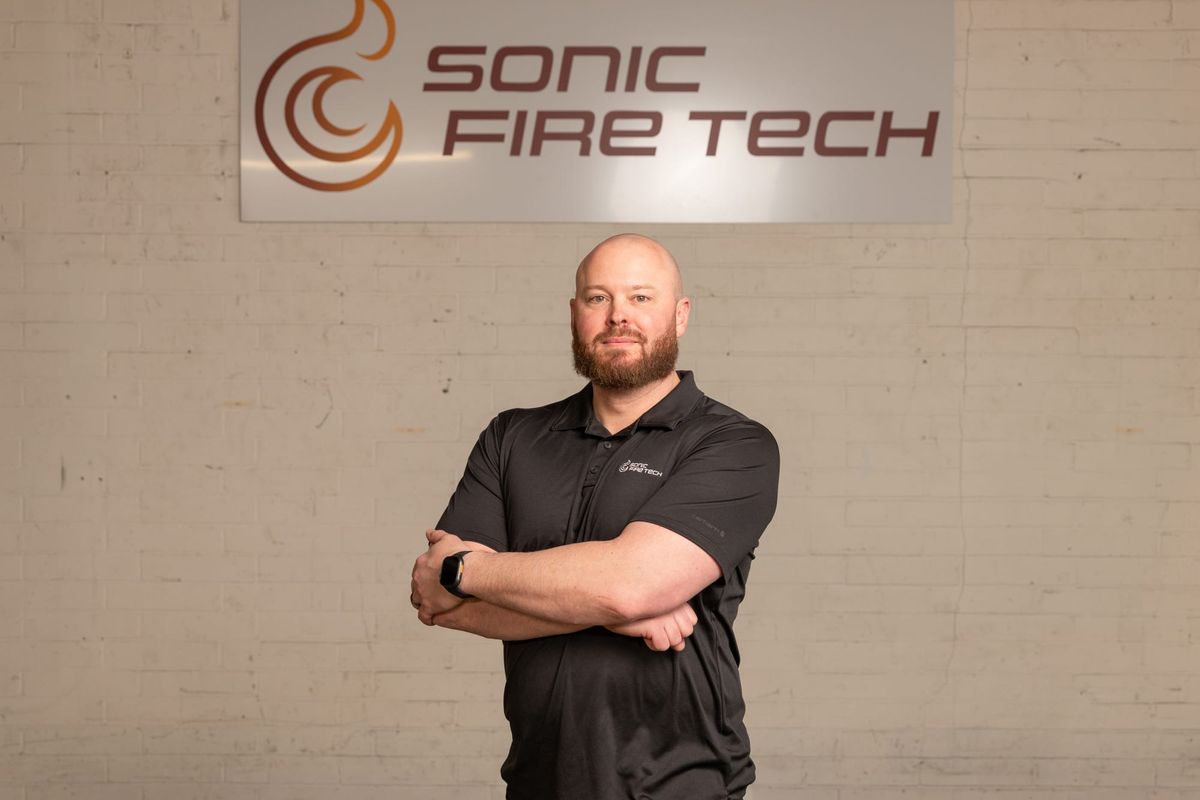
Cleveland-based Sonic Fire Tech has closed out its seed financing at $15 million, capital the company will put toward certification testing and scaling production of its waterless fire suppression systems.
The O.H.I.O. Fund led the financing, with participation from Khosla Ventures. Sonic Fire Tech announced an initial $3.5 million in seed capital in October 2025.
The company's systems use infrasound, low-frequency sound waves below the range of human hearing, to disrupt combustion without water or chemicals. Coverage over the past year framed the systems primarily as wildfire defense. The company now points first to homes, lithium-ion battery installations and commercial properties. Remington Hotchkis, the company's chief commercialization officer, attributed the change to what the company learned from putting the technology in front of the people who regulate and underwrite fire risk.
"Our live demos of the technology for fire service professionals, insurers, and code agencies delivered a clear path to achieving an alternative means and methods validation for interior use cases," Hotchkis said, referring to the process by which building officials approve a system that departs from prescribed code requirements.
The company has since concentrated on commercial kitchens, data centers and other settings in which water or chemical agents can cause as much damage as the fire itself.
Wildfire work continues on a separate track. Hotchkis noted that a portable acoustic suppression backpack developed by the company "is going to be evaluated with California's and other fire agencies to better understand how it can support first responders."
Sonic Fire Tech is working through UL validation testing for its Home Defense system, along with additional testing intended to establish the product as a code-compliant alternative to residential sprinklers. According to the company, third-party fire protection engineers have already conducted testing showing performance equivalent to National Fire Protection Association (NFPA) 13D residential sprinkler standards. The company did not identify the engineering firms involved, and local fire officials would still need to approve individual installations.
Co-founder and CEO Geoff Bruder is a former NASA engineer who recruited colleagues from his time at the agency and from his work with Ghost Works Engineering. Sonic Fire Tech and NASA Glenn Research Center are both headquartered in Cleveland, which Hotchkis described as giving the company access to regional aerospace and engineering talent, though the relationship is one of proximity rather than research.
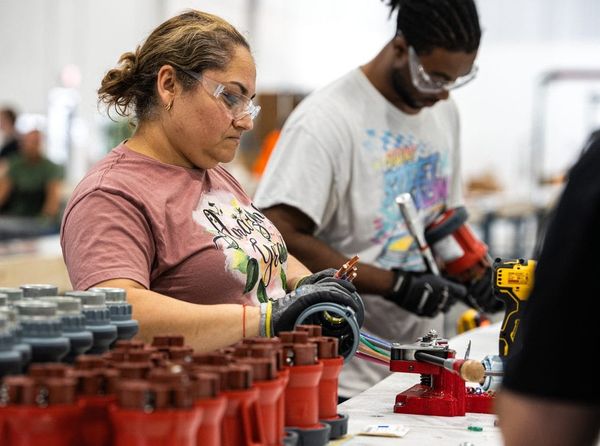
The Cleveland operation employs 10 people. "We expect to continue expanding our Cleveland-based engineering and manufacturing team as we advance our certification path and scale up for full commercial production," Hotchkis said. Systems are built at the Cleveland headquarters, and the company plans to scale U.S. production in Ohio and through Ohio-based suppliers while working with licensed distributors, installers and builders nationally.
Jeffrey Stern and Ray Leach met Bruder before the fund closed its first vehicle, according to the fund, and watched the technology move from research toward a validated product.
"Acoustic fire suppression has been validated for decades, including by DARPA, but no one had solved the harder problem of turning that science into something field-deployable until Geoff and his team did," the fund said in an interview with OTN, referring to the Defense Advanced Research Projects Agency. The fund added that based on its reading of the market, no incumbent fire suppression company is pursuing an acoustic approach.
Ohio's manufacturing base is central to the fund's thesis. "Founders are choosing to launch their companies in Ohio not only for its engineering talent but also for Ohio's manufacturing ecosystem, supply chain, and workforce," the fund said. The O.H.I.O. Fund has deployed capital into 33 investments to date.
The announcement described the financing as one of the largest seed rounds in Ohio history. Asked for the basis, the fund pointed to PitchBook data covering 982 completed Ohio seed rounds dating to 1989, in which four Ohio-headquartered companies have raised larger seed financings: Erebor Bank in Columbus at $635 million, Niobium Microsystems in Dayton at $35.85 million, Fello in Cleveland at $25 million and Strive in Dublin at $20 million. Sonic Fire Tech's total matches a $15 million round raised in 2026 by 1872, another O.H.I.O. Fund portfolio company.
The company's most visible residential project so far is a 3D-printed home under construction by PCI Builders in Altadena, California, inside the Eaton Fire burn zone. Sonic Fire Tech said more than 50 additional installations are planned for 2026 across multiple states, tied to pilot use cases that align with its UL testing.