Synthe6's first year bets on Ohio's polymer belt
Bounce Innovation Hub is accepting applications for the second cohort of its Synthe6 Materials Accelerator. This 12-month program helps advanced materials and polymer startups commercialize by providing up to $500K in R&D grants, peer mentorship, and deep connections to Ohio's industry leaders.

Bounce Innovation Hub is accepting applications for the second cohort of its Synthe6 Materials Accelerator, a 12-month commercialization program for polymer and advanced materials startups, after wrapping a first year that saw nine companies push toward commercialization across sustainable materials, recycling, water treatment, defense, healthcare, and next-generation polymers.
The program's biggest Year 1 takeaway, according to the Synthe6 team, was less about curriculum than about timing.
"These founders are busy, overloaded, and often balancing commercialization work with technical development, fundraising, customer conversations, and day-to-day company operations," the Synthe6 team explained. "The opportunity is to make the program more useful, flexible, and easier to apply in the moments when founders need it."
That posture is shaping Round 2 and reflects a broader recognition that advanced materials startups face a different commercialization arc than software companies, with longer timelines, more capital intensity, and a heavier dependence on physical testing, customer trials, and manufacturing partnerships.
Year 1: Nine startups, two R&D grants
The first cohort included Auxilium Health, BioVerde, Plastinuva, GelPure, Materium, Seauciel, TKM Ballistics, ACE Innovations, and PolyKinetix. Seven received the standard $25,000 Synthe6 accelerator grant. Two received larger translational R&D grants in place of that award.
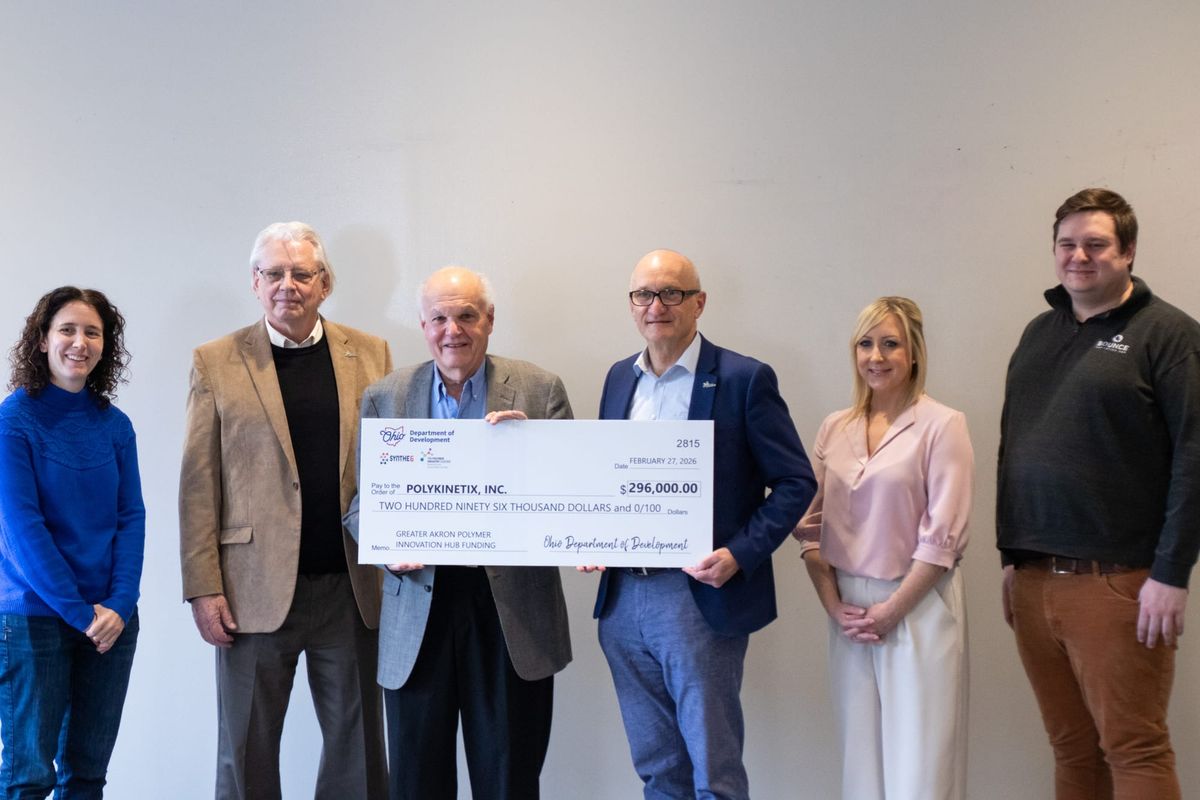
Auxilium Health was awarded an R&D grant to commercialize a bio-based aerogel wound dressing that actively heals while detecting and preventing infections. PolyKinetix received an R&D grant to scale a portable system that converts mixed plastics and old tires into usable fuels.
The two grant tracks serve different purposes. The $25,000 accelerator grant gives cohort startups flexible, non-dilutive funding for expenses traditional financing rarely covers, including legal and IP work, university licensing, contractors, testing, technical validation, and customer discovery. The larger R&D grants, which run up to $500,000, are tied to specific technical milestones, research plans, budgets, and implementation needs.
Across the cohort, first-quarter progress included finalized pilot production plans, demonstrated storage and transportation viability for biomaterials, refined value propositions, unlocked testing pipelines, technical hires, defined scale-up pathways, and increased early product sales. The Synthe6 team noted that the program does not announce company-specific milestones beyond the publicly posted updates, citing the sensitivity of active conversations with investors, grant reviewers, customers, and partners.
"The quality of companies we saw in the inaugural Synthe6 cohort reinforced that there is tremendous opportunity for Ohio to lead in materials innovation," said Nick Glavan, Program Director for Synthe6.
What Year 1 taught the program
The cohort model itself was one of the clearest takeaways. Even though the nine companies were working on different technologies, the Synthe6 team observed that many of the commercialization challenges they faced were similar.
"Founders benefit from seeing how others are thinking through customer discovery, technical validation, manufacturing questions, funding strategy, and market entry," the team noted. "That peer learning is hard to replicate in a one-on-one advising model."
Round 2 will lean into that peer dynamic. Most Round 1 participants have expressed interest in connecting with future cohort members, creating the foundation of a network that did not exist when the program launched. Year 2 will also benefit from operational lift, with Bounce no longer building program materials in real time and able to focus on refining tools and sharpening workshop content.
How Round 2 works
The second cohort runs as a 12-month program built around weekly workshops, expert mentorship, and direct access to industry leaders, corporate partners, and technical resources. Applications are open to startups based in Ohio or willing to relocate to the state. Applicants can apply solely for the accelerator and the $25,000 grant, or submit a combined application that includes a request for a translational R&D grant of up to $500,000.
Across three to four cycles spanning 2025, 2026, and beyond, the Polymer Industry Cluster expects to award at least $6 million in total grant funding.
Proposals are evaluated by the PIC's Innovation & Commercialization Committee against criteria designed to identify projects with both scientific merit and a credible path to market. The strongest applications demonstrate alignment with the cluster's innovation priorities, scientific rigor, a defined market need and competitive advantage, and a realistic implementation plan with clear milestones and budget. Reviewers also weigh the strength of collaborations with regional companies and academic institutions, the use of PIC capabilities, and the extent to which matching funds have been secured.
The industry network
Synthe6 connects startups to the broader Polymer Industry Cluster ecosystem, which is powered by the Greater Akron Chamber and spans polymer manufacturers, corporate innovation leaders, technical experts, academic partners, investors, mentors, and service providers.
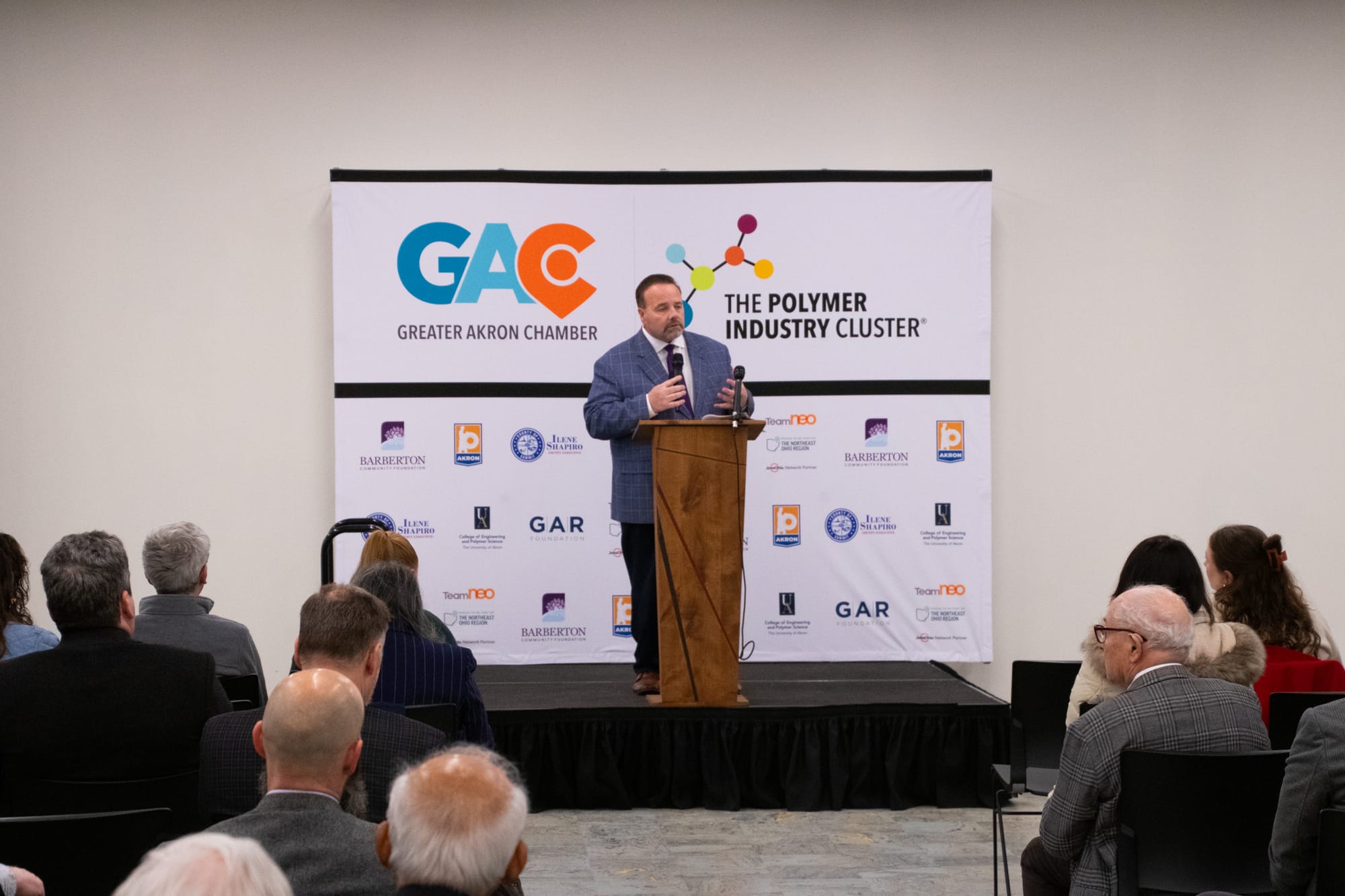
Some partners lead workshops, sit on panels, and give founders direct feedback. Others provide technical perspective, review pilot concepts, or step in as potential collaborators on commercialization challenges. Founders are also connected to vetted service providers for legal, IP, testing, manufacturing, regulatory, branding, sales, and market development needs.
Organizations engaged with Synthe6 include Goodyear, Synthomer, ChemQuest, GOJO, Bridgestone, Avery Dennison, Intertek, and Meyers Roman, along with others connected through the Polymer Industry Cluster and Bounce's broader network.
What success looks like over five years
The Synthe6 team pushed back gently on the framing that Ohio still needs to earn its place in materials innovation. The Akron-Cleveland corridor already hosts the headquarters or major operations of more than 400 polymer and advanced materials companies, including Goodyear, Avient, Lubrizol, Sherwin-Williams, Parker Hannifin, and Swagelok. Recent corporate investment has reinforced that footprint, including Goodyear's Akron Innovation Center and Sherwin-Williams's $600 million global headquarters and R&D campus completed in Cleveland in 2024.
The region's academic infrastructure is similarly deep, with top-ranked polymer programs at the University of Akron and Case Western Reserve University and liquid crystal research expertise at Kent State University. Public investment is layering on top, including $51 million in federal funding through the Economic Development Administration's Tech Hubs program, $31.25 million from Ohio's Innovation Hubs Program, and $10.4 million in local investment for the Polymer Industry Cluster. Synthe6 itself is supported in part by the State of Ohio's Innovation Hubs Program.
"Ohio already has world-class expertise in polymers and advanced materials," said Jessica Sublett, President and CEO of Bounce Innovation Hub. "Through Synthe6 and the broader work of the Polymer Industry Cluster, we are creating clearer pathways for startups to commercialize technologies here, connect with industry leaders, and scale companies that strengthen both our regional economy and domestic manufacturing capabilities."
Materials startups face a particular set of challenges, including capital that fits long tough-tech timelines, access to technical facilities and manufacturing partners, and support translating technical progress into customer traction and investment-ready milestones.
Looking ahead five years, the Synthe6 team described success as more materials startups choosing to build in Ohio, more technologies moving from research into commercial pilots, more industry-startup collaborations, more investment attracted to the region, and more companies scaling in the state rather than leaving to find support elsewhere.