BrandRank.AI raises $3 million to help brands win in AI answers
The Cincinnati company measures what ChatGPT, Claude and other answer engines say about roughly 100 brands, and co-founder Pete Blackshaw says market share no longer predicts what the models recommend. New capital will fund an industry-by-industry expansion.

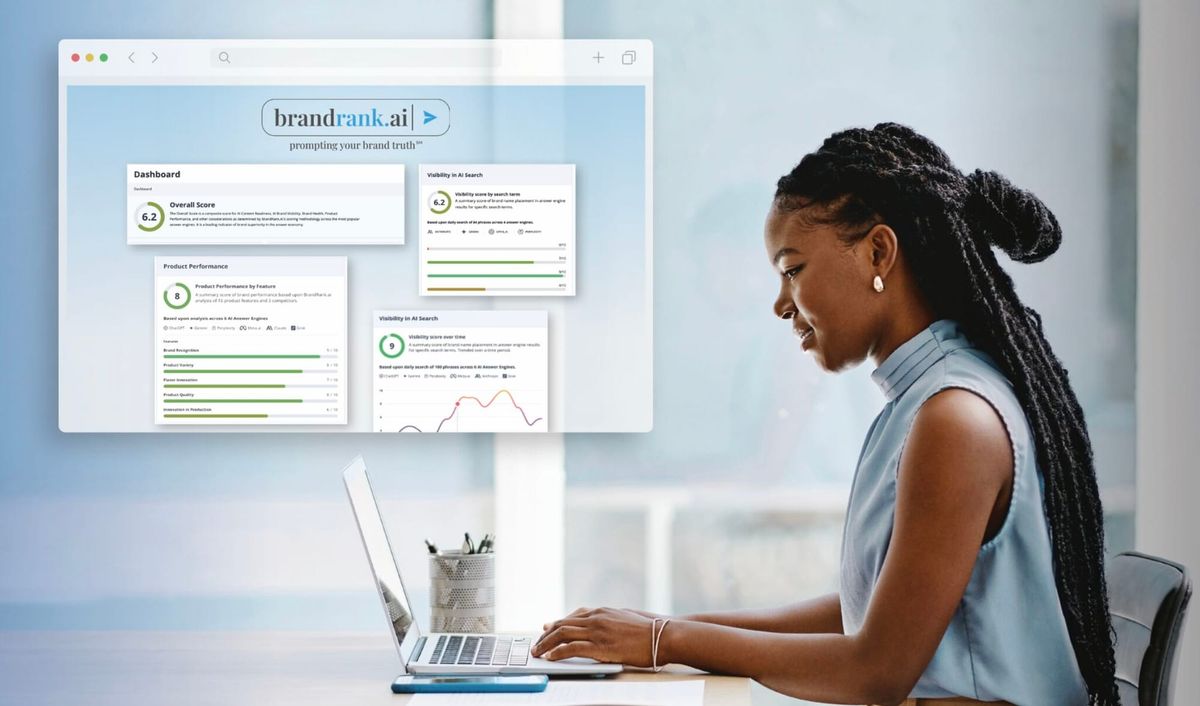
When shoppers want to know which product to buy, more of them are asking an AI answer engine rather than typing a query into a search bar. Cincinnati startup BrandRank.AI is built on the idea that the shift will remake how brands get discovered, and it now has fresh capital to press the point.
The company has closed the initial round of a $3 million seed financing co-led by Grit Capital Partners and QCA Ventures, with participation from SideCar Angels and a group of consumer-industry veterans. BrandRank.AI works in a field called answer engine optimization, measuring what large language models such as ChatGPT and Claude say about brands when consumers ask them for recommendations.
By the numbers
- $3 million seed financing, co-led by Grit Capital Partners and QCA Ventures
- 100 brands monitored worldwide
- Three signals tracked for each brand
- 6 billion daily prompts fielded by AI answer engines, by the company's count
- $31 million raised by Blackshaw's first startup, which sold to Nielsen
- Nine years at Nestlé in Switzerland before Blackshaw returned to Ohio
What the platform tracks
Pete Blackshaw, the company's co-founder and CEO, likens the platform to a Nielsen-style ratings service for machine-generated answers. Visibility measures whether a brand appears and how often the engines recommend it. Vulnerability captures whether it shows up in a negative or inaccurate light. Readiness gauges how well a company markets to algorithms.
The stakes are large, Blackshaw explained, because AI answer engines now field more than 6 billion prompts a day by the company's count, and each one is a chance for a brand to gain a recommendation or lose one.
Market share no longer predicts answer share
Reach and reputation no longer move together, according to Blackshaw. "High market share does not equate to high answer share," he said. Established brands often score lower on answer share than their market position would suggest, while smaller challengers that invest in clear, consumer-friendly content can pull ahead.
The engines reward substance over spin, he noted, and they lean heavily on signals of trust. "Marketing has a harder time winning in this environment. You can't spin. You can't throw out a lot of slogans. They go right for the substance," he said.
Companies often bury strong material, including sustainability records, in PDF files the engines struggle to read. "You have to make your content really liquid," Blackshaw said, so the information can flow into the systems shaping consumer decisions.
From measurement into content
With the new capital, the company plans to expand its sales team and invest further in the platform. It intends to concentrate on a handful of industries rather than chasing every sector at once. The team already works with consumer packaged goods companies and is weighing moves into automotive, insurance, and higher education, the last through a partnership with the college-research site Niche.
That expansion builds on BrandRank's recent acquisition of the technology behind Averi, which extends the platform from measurement into content creation. Many clients want more than a readout of what the engines are saying, Blackshaw noted. The Averi tools let brands produce the content the data calls for, with verification steps built in. The company recently rolled out a related feature, still without an official name, that flags when a brand leans too heavily on synthetic content and risks losing its voice or drawing penalties from the engines.
The company also wants to lead on accuracy. It received a non-dilutive grant through Ohio Third Frontier to advance work on reducing AI hallucinations, which Blackshaw wants to push further than rivals elsewhere in the country.
Raising money in the Midwest
A California native who came to Ohio for a job at Procter & Gamble, Blackshaw is a two-time founder who has spent his career at the intersection of trust and digital media. His first startup raised about $31 million and sold to Nielsen. He later spent nine years at Nestlé in Switzerland before returning to lead Cintrifuse, the Cincinnati startup and venture organization, and then launching BrandRank.AI.
Building an AI company in Ohio carries its own challenge, Blackshaw acknowledged. "It's a little bit harder to raise money here because people do have their doubts," he said. BrandRank.AI competes against firms that have raised far more, he added, and part of the job is overcoming assumptions about what a Midwestern startup can accomplish.
He sees the current moment as an equalizer. Inexpensive, capable AI tools let a lean team do what once took far more money and staff. "Every day I'm blown away by how much you can do with less because of partners like Claude," he said.
Given the chance to set state policy, Blackshaw would lean into that edge. "If I were governor of Ohio, I would be doubling down on anything that could further prime the pump for entrepreneurs leveraging these incredible tools. I'd be creating incentives," he said. He pointed to work BrandRank.AI has done with JobsOhio, tracking how Ohio and other states register in AI answers on questions of business attractiveness and readiness.
For now, the priority is choosing the industries where BrandRank.AI can make the biggest impact and moving before larger rivals catch up. The company expects to name additional investors, including another Ohio fund, in the weeks ahead.