Greater Cincinnati startup leaders join national push to make entrepreneurship a policy priority
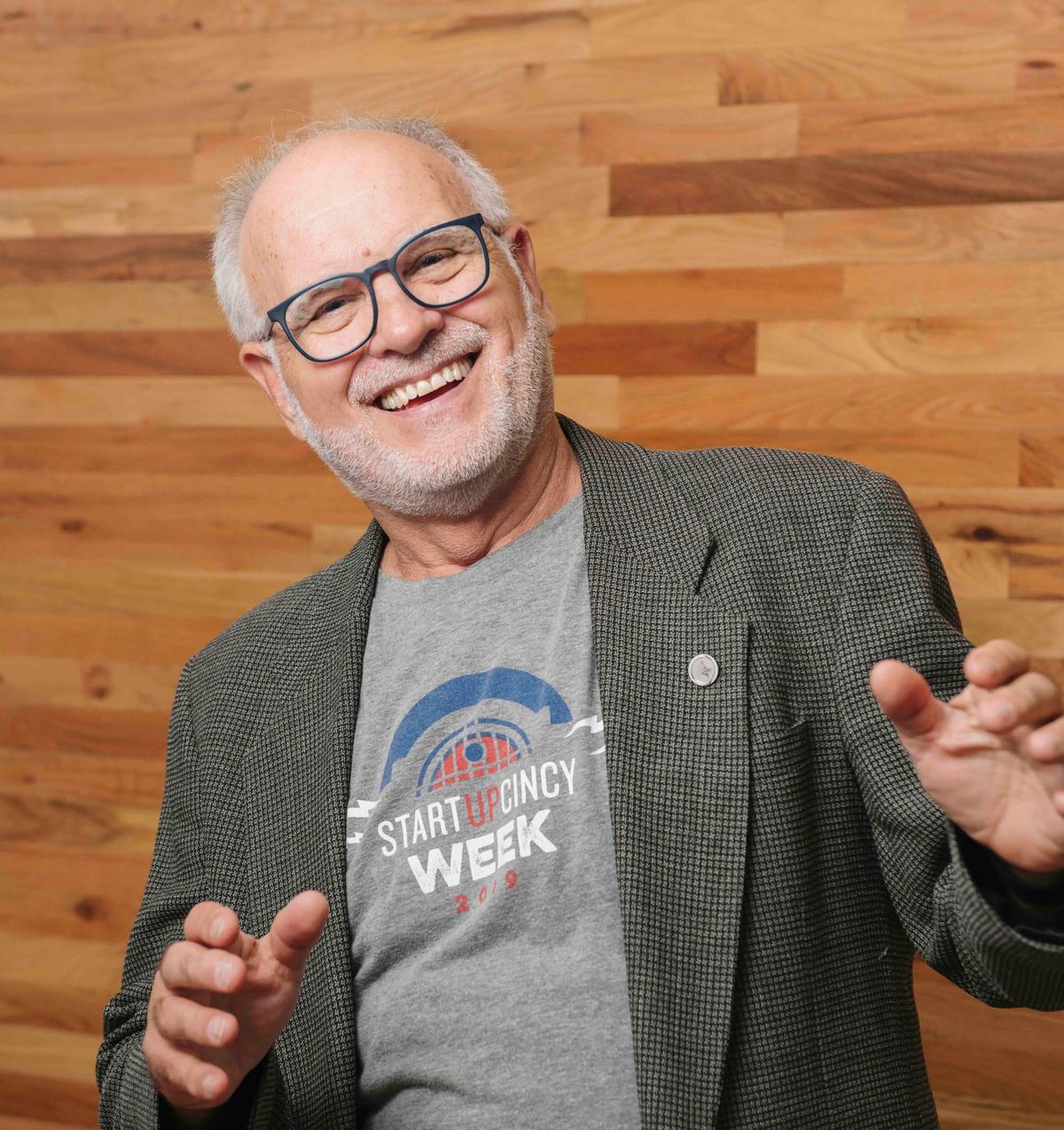
Bill Tucker, founder of ImpactCincy, is volunteering as Right to Start’s Greater Cincinnati ambassador. After a Nov. 17 launch in Covington and a summit in Washington, D.C., he plans to rally local support organizations around state and federal policy in early 2027.

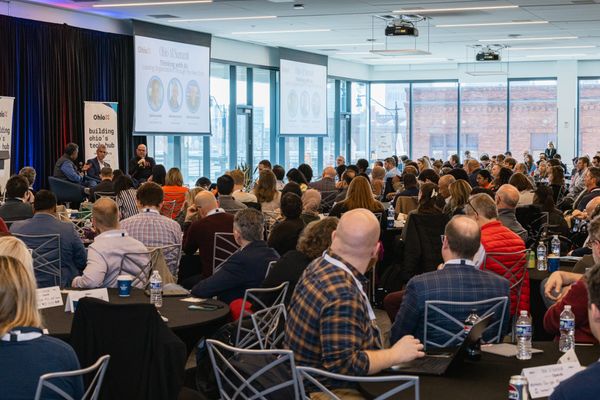
Cincinnati Mayor Aftab Pureval crossed the Ohio River on Nov. 17 to join Kenton County Judge/Executive Kris Knochelmann at SparkHaus in Covington. In front of the region’s entrepreneurial support organizations, the two leaders shared their communities’ proclamations recognizing Global Entrepreneurship Week.
The gathering was the Greater Cincinnati launch of America the Entrepreneurial, a national campaign led by the nonprofit Right to Start. Bill Tucker, the region’s volunteer ambassador for the group, called it a big step to bring both leaders together on the Kentucky side of the river.
Later that week, Tucker went to Washington, D.C., for the campaign’s America the Entrepreneurial Summit. Now he is planning how to turn that momentum into policy work in Ohio.
By the numbers
- 61 Right to Start ambassadors nationwide; a little under half attended the D.C. summit
- More than 1,000 letters sent to mayors in about six months, against a goal of 150
- More than 30 governors have joined the campaign’s compact
- 94% of voters say starting a business is important, according to research Right to Start commissioned
- 45% of founders in a Right to Start survey cited access to capital as a challenge; 25% cited government red tape
A third retirement, a new volunteer role
Tucker’s career began in commercial printing, where he eventually became part of an $11 billion company. After an early retirement, volunteer work led him to Flywheel Social Enterprise Hub in 2011. Flywheel supports entrepreneurs building businesses for both purpose and profit. He became its executive director near the end of 2013 and worked to make it part of the growing StartupCincy ecosystem.
After retiring again, Tucker spent about three years at Miami University connecting students, faculty, alumni and ecosystem partners. Along the way he formed ImpactCincy, which he described as an organization of one. Through it, he supports nonprofits, makes impact investments and connects people across the startup community. He also invests through QCA Ventures.
Victor Hwang, Right to Start’s founder and former vice president of entrepreneurship at the Kauffman Foundation, asked Tucker to become an ambassador. He agreed right away. “I’m one of those people that tends to jump in with both feet,” Tucker said.
Campaign moves beyond one-to-one meetings
For about seven years, Right to Start relied on one-to-one engagement, Tucker explained. In the last nine months, the organization added staff and launched America the Entrepreneurial. The campaign is tied to the country’s 250th anniversary and built around founding mayors, founding partners and a compact for governors. Pureval is one of more than 100 founding mayors.
The summit in Washington included a day and a quarter of sessions. Speakers included former Arkansas Gov. Asa Hutchinson and Senate and House staff who work on business issues.
Tucker noted that the strong numbers raise a bigger question. “It’s one thing to get the numbers, all the metrics and say all this good stuff, but what really happens next?” Tucker said.
Jobs, AI and the gap between intent and action
As Tucker described it, the summit’s core message was about jobs. Hwang told ambassadors that new businesses create more than 90% of new jobs in the country. Tucker sees that fact meeting a moment when AI is displacing workers.
“The best vehicle for getting those folks back in the workplace is through new business, whether they start one, whether they join one,” he said.
Strong public support doesn’t guarantee action, he noted. “And yet that doesn’t translate to the public policy,” Tucker said of the 94% figure. Elected officials face urgent issues such as affordability and health care, he added, “and entrepreneurship tends to fall to the bottom.” Figures shared at the summit also showed a gap between interest and follow-through: 69% of people said they were thinking about starting a business, 42% said they planned to, and only 9% did.
Barriers go beyond capital
Right to Start’s founder survey was informal. Entrepreneurial support organizations (ESOs) collected the responses, and the results matched what Tucker has seen working with startups.
“They all need money. There’s never enough money,” he said. “But that, I think, is disguising where the real issues are, and that is, in order to start this business, I have to have a sustainable lifestyle.”
Child care, health care and housing were the top three things holding founders back, Tucker noted. He sees red tape as a problem of visibility and access. “There are so many programs out there, but understanding which one is right for that founder, which one could help them both with funding and with coaching and those kinds of things, it’s incredibly difficult,” he said. That gap makes ESOs such as Cintrifuse, Blue North and Flywheel essential, and Tucker wants more program and operating support for them.
Policy priorities on the table
Tucker pointed to Section 1202 of the federal tax code. It gives investors favorable tax treatment on qualifying small businesses, but only for C corporations. “If we can shift that and make that available to LLCs, now we’ve changed the whole dynamic of funding,” he said.
Other proposals discussed at the summit included the DEAL Act, which would change regulations to allow investments in funds of funds. Attendees also discussed a proposal to make smaller investment funds easier to form, and housing provisions that did not pass the Senate this fall.
Everyday small business funding matters too. Tucker is a founding board member of the Women’s Business Center of Southwest Ohio, part of the Economic and Community Development Institute (ECDI). He has watched the center cut back its offerings as Small Business Administration loan support changed.
Next steps start with local support organizations
Ambassadors work in their own regions, so next steps are largely up to them, Tucker explained. On the flight home from Washington, he outlined a plan. He will convene Greater Cincinnati’s ESOs through existing StartupCincy channels and ask each one “what are the three things that could help you as an ESO really meet the needs of your founders,” whether through local, state or federal policy. That work begins after the new year.
Tucker also plans to bring those priorities to Ohio legislators as they prepare for the coming session. “I don’t want it to be just my voice. What I want it to be is the voice of the ESOs in the region,” he said. No organization pays him for this role, and he considers it part of his legacy. “This is a volunteer gig for me,” he said.
His wife has a phrase for his career path. “My wife says that I don’t retire, I faux tire,” Tucker said.
For now, anyone interested in getting involved can contact Tucker directly. He plans to email launch attendees with specific next steps, such as encouraging local mayors to become founding mayors and signing up organizations as campaign partners.