Running local: A year later, MCCTC is building AI right here
High school journalist Daniel Herrmann returns for Ohio Tech Day 2026 to see local innovation in action. Students at the career center showcased desktop-based offline AI models, workflow acceleration, and practical FANUC robotics programming tailored for modern industrial floors.


By Daniel Herrmann
Last fall I wrote about Ohio Tech Day at the Mahoning County Career & Technical Center (MCCTC), and I left impressed by the certifications, the equipment, and how much the students obviously cared about what they were building. On Friday, September 25, I went back for Ohio Tech Day 2026 to see what had changed in a year.
The biggest difference was how people talked about AI. Last year a lot of people were still asking what it even was. This year students were showing me what they had built with it.
An AI That Lives in a Box on the Desk
We spent most of the visit in the new LEAD (Leadership, Employment, Advancement and Discovery) Center. My favorite demo came from Zane Ruheim, who was sitting at a workstation he built himself. On the monitor was a chat window for an AI model he calls "Douglas." It wasn't ChatGPT, and it wasn't connected to some big company's model online. It was running entirely on the computer sitting in front of us.
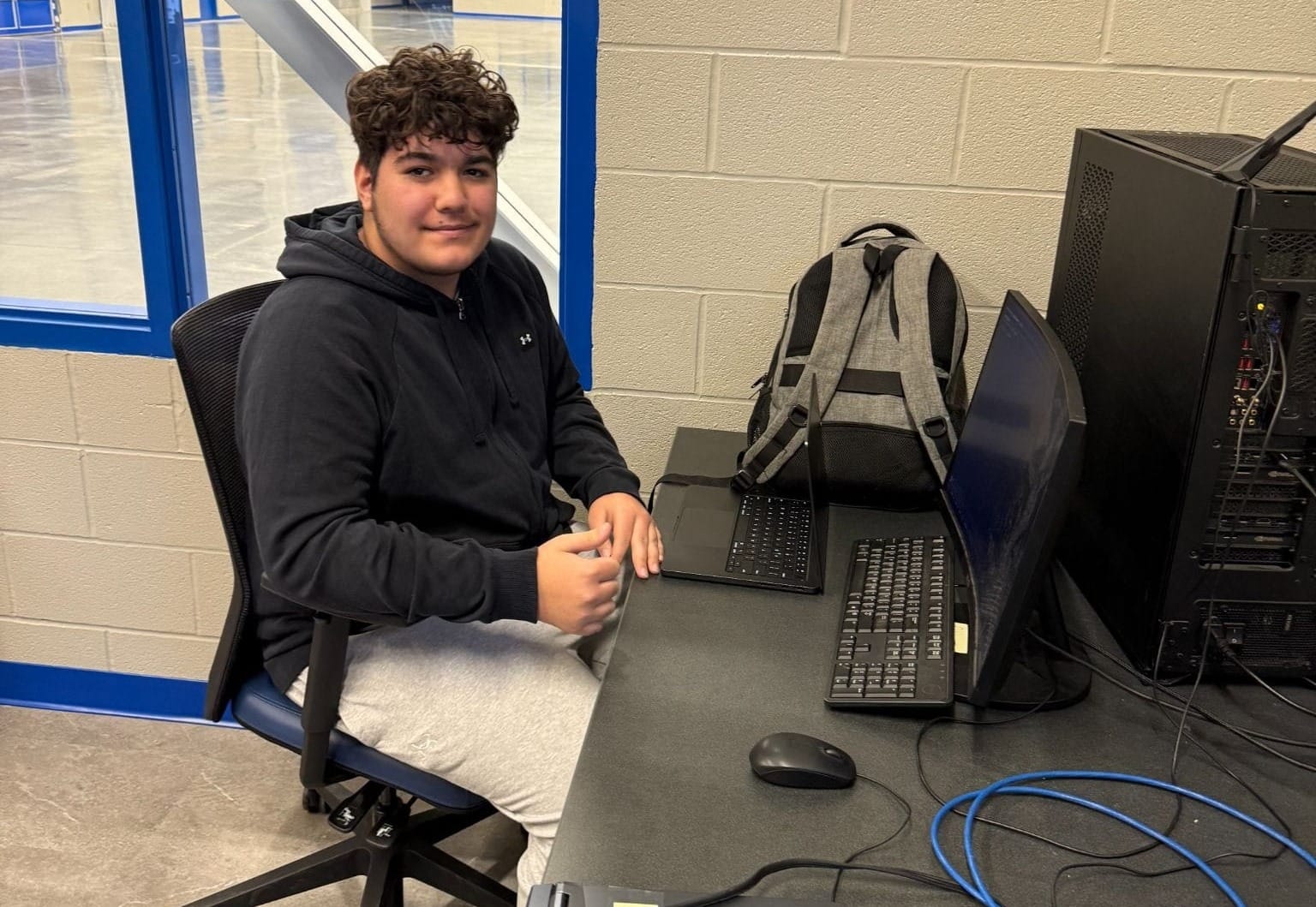
Zane typed, "Write a quick poem for tech day." The first words showed up in 1.6 seconds, and the whole poem was done in about five. That works out to 102 tokens at 30.9 tokens per second, about five times faster than a person can read. One stanza even described the room we were standing in:
No cloud, no server farm away, / Just hardware on display. / Private, local, here and now.
"We built Douglas for as cheap as possible," Zane said. "It is an agent built for long horizon agentic tasks for coding, research, and business management, anything of that sort that you would delegate to a staff member."
I kept thinking about this one after I left. When a model runs locally, your data stays on your own machine, and you aren't paying a monthly subscription that limits how much you can use it. Big tech companies are spending billions of dollars on data centers, and a high school student in Canfield has a working version of the same idea on his desk. The screen also showed a 131,000-token context window, which is enough to hold about a full-length novel in memory at once.
Using AI to Speed Up, Not Skip Steps
Also in the LEAD Center, we sat in on Michael Sekol's class. The word he kept using was "accelerate." He wants students to use AI to speed up their work, not to do it for them.
A lot of schools mostly talk about AI as a cheating problem, but Sekol sees it more like a tool. "Make AI work for us," he said. Students still have to know the material. AI just helps them get through it faster once they do.
Where Code Meets Steel
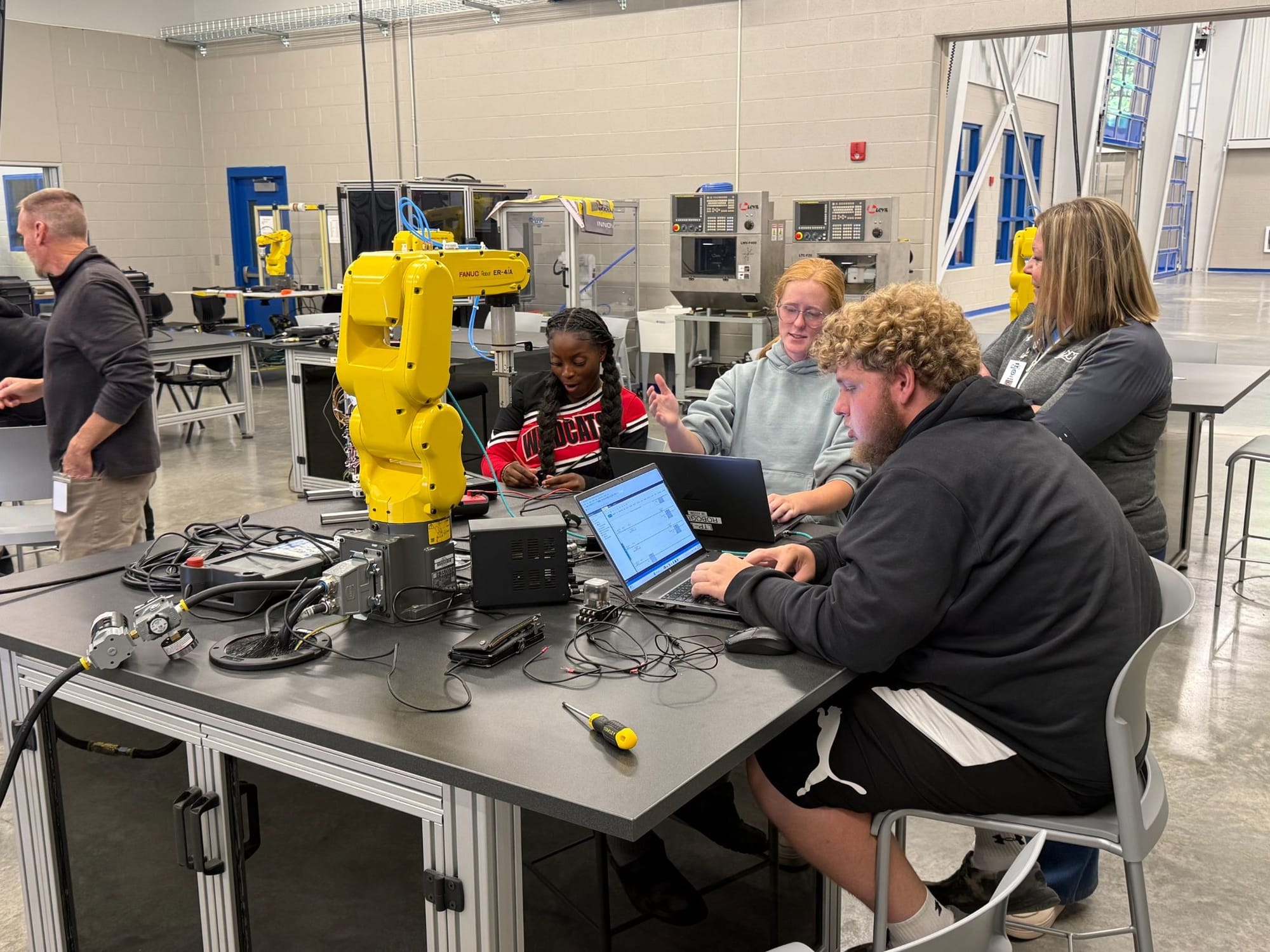
Next door, Jason Moore's students were gathered around a yellow FANUC industrial robot arm, the same kind used on real factory floors. Their laptops had ladder logic up on the screen. Ladder logic is the visual programming language most industrial controllers use, and the students were using timer blocks to switch lights and outputs on and off. One student checked wiring with a multimeter while another adjusted the code, and they talked each other through it the whole time.
Moore was straightforward about where things are headed. He said manufacturing is going to "integrate more and more robotics," and his students are learning how to program, wire, and troubleshoot those systems now.
Why It Matters
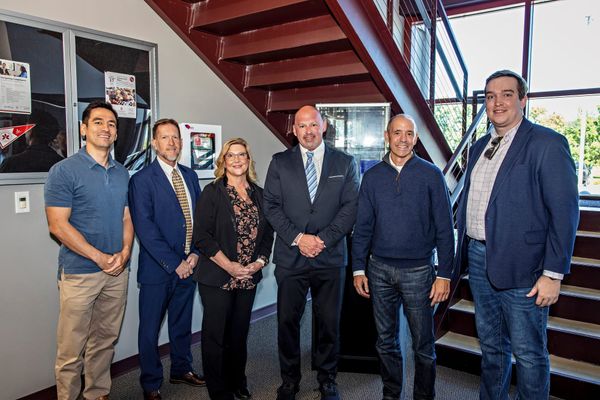
Dr. Mara Banfield, MCCTC's Director and STEM Superintendent, led our tour. What stood out to me most was how well everything connected. One student built an AI system that runs on his own hardware. One teacher is showing students how to use AI to work faster. Another is training students to program the robots that are changing manufacturing. In every room, the goal seemed to be the same: learn the technology well enough to control it, instead of just using what someone else made.
Last year I wrote that Ohio's tech future isn't only being built in Columbus or Cleveland. After going back, I think that's even more true. Some of it is already running on a desk in Canfield, and I'm curious to see what these students will have built by next year.
Daniel Herrmann is a senior at Canfield High School and an OhioX student writer and Regional Student Liaison. He is interested in cybersecurity, AI and national security, and he is building his own AI research agent. This is his second year covering Ohio Tech Day at MCCTC.