How a basement prototype became Ohio's water tech answer
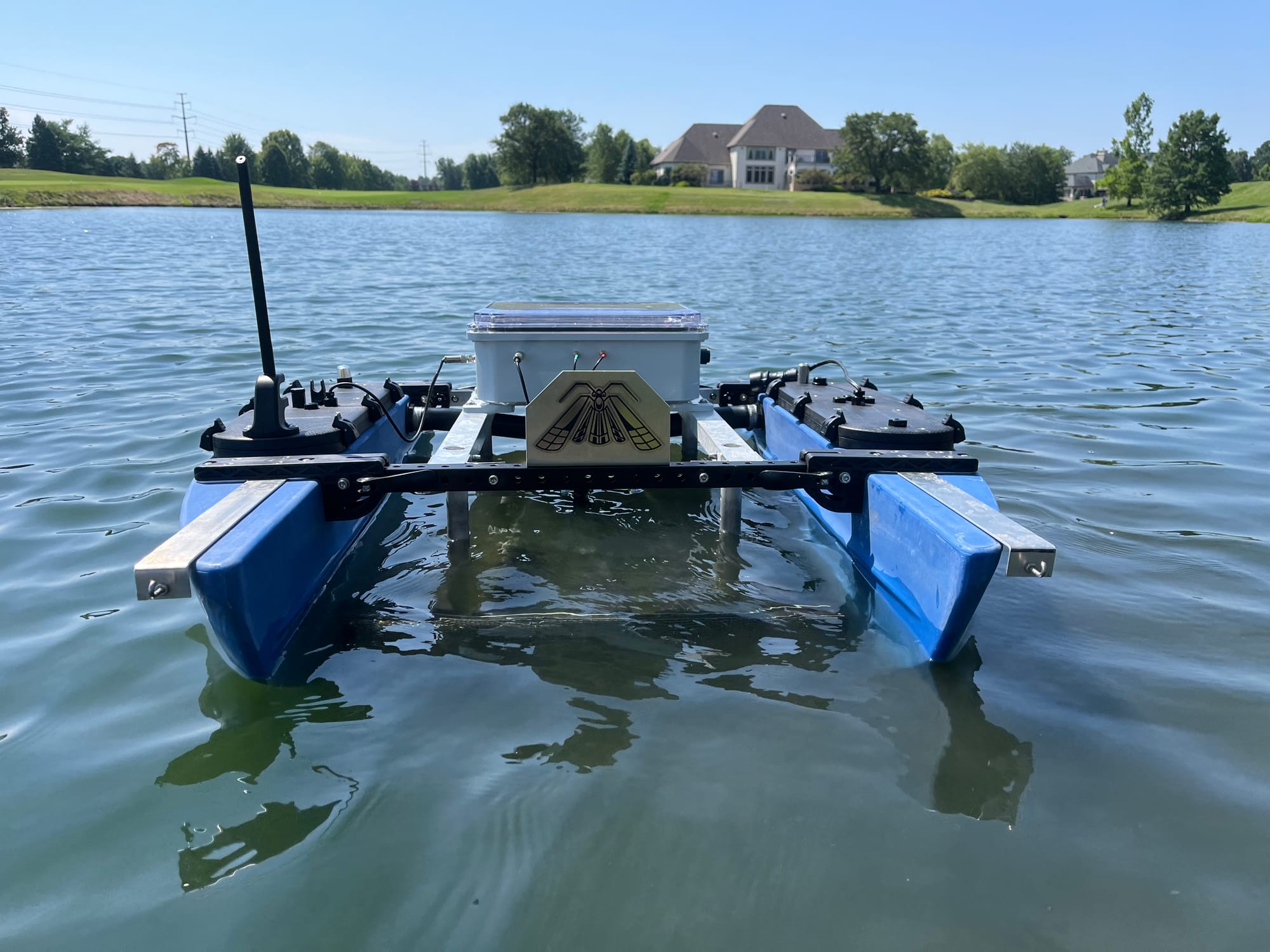
Hilliard-based Caddis is scaling the MANTA, an autonomous aquatic drone that uses UV-C light to neutralize harmful algal blooms without chemicals. Developed at Ohio State, the system acts as a "Roomba for water," providing real-time data and sustainable management for Ohio’s reservoirs.

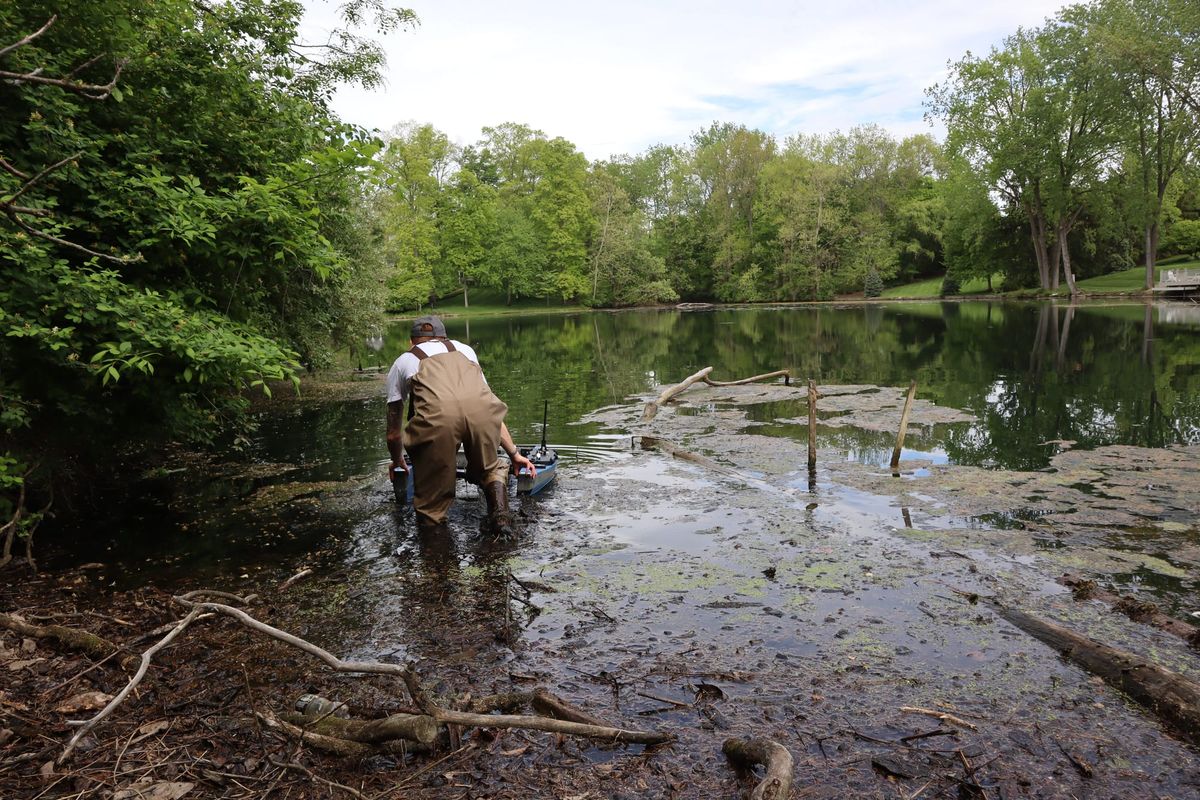
Harmful algal blooms are a growing problem for Ohio's lakes, ponds, and reservoirs — fouling water, threatening ecosystems, and costing communities money. Most solutions still rely on chemicals. Kendall Byrd thinks there's a better way, and he's been building it since graduate school.
Byrd didn't come to Ohio State with a plan to start a company. He came with a specific advisor in mind. "The whole reason I came to Ohio State, and pursued a graduate degree, was to go somewhere I could build something new and take it to market," Byrd said. "I was already working in industry and doing well, but I wanted to create something of my own."
That something became Caddis, a Hilliard-based water technology company developing autonomous, non-chemical solutions to manage harmful algal blooms. Its flagship product, the MANTA, is an aquatic drone now operating across Ohio, and Byrd is preparing for the company's first round of outside funding.
Byrd was already using aerial drones to monitor and quantify algae in the field when the logical next question emerged: if you can detect the problem, can you solve it? Dr. Lee thought so. She proposed building an aquatic system to treat the water directly, and Byrd built the first version in his basement. That prototype eventually became the MANTA.
OSU didn't just provide the academic environment. The university helped fund early development, supported lab validation of the first prototype, and licensed the technology to Caddis on an exclusive basis. The university also worked with Byrd and Dr. Lee — now an OSU professor and department chair, and Caddis's environmental sciences expert — to establish conflict-of-interest guidelines that allowed her to remain his principal investigator as the company took shape.
"OSU really helped incubate and shape the idea into something viable," Byrd said.
That relationship remains active. Byrd describes OSU as a collaborative partner that has been willing to advocate for Caddis when needed.
"There have been times where Ohio State has stepped in to advocate for us and ensure we weren't overlooked or taken advantage of as a young company," he said.
A Roomba for Water
The MANTA operates the way Byrd explains it: like a Roomba for water. It runs on a set schedule, moves across a pond's surface, and applies UV-C LED treatment to neutralize algae and toxins without chemicals. While operating, it continuously collects water quality data that customers can access in real time and that Caddis uses to improve treatment targeting. No one needs to be on-site.
Current customers are primarily golf courses, municipal parks, and recreation departments. For golf courses, the appeal is maintaining water aesthetics without copper sulfate, which can affect surrounding turf. For municipalities, the data layer matters as much as the treatment.
"In both cases, we're solving the same core problem by providing a more consistent, non-chemical approach to maintaining water quality and appearance," Byrd said.
Byrd built the company in Hilliard as part of the Central Ohio community's City Lab, where affordable office space gave Caddis a professional foothold early without the overhead that would have otherwise slowed things down. The city's economic development office also provided a small grant to offset early engineering costs at Converge Technologies, a Hilliard-based manufacturing partner.
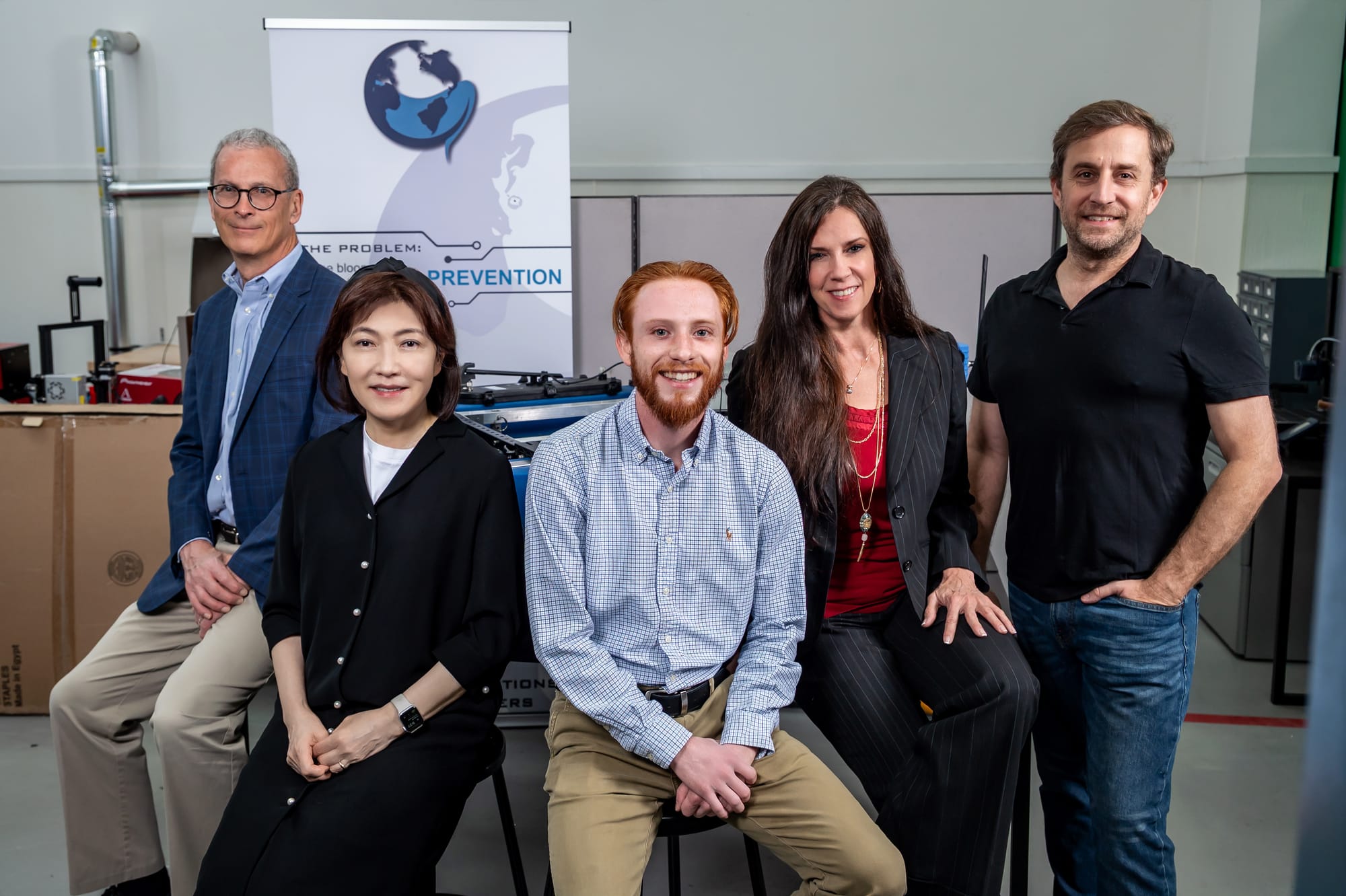
"As a young, pre-revenue company, having access to an affordable office space made a big difference. It allowed us to operate professionally without needing to work out of a garage or patch things together early on," he said.
The transition from researcher to founder brought its own education. Byrd says the hardest part wasn't technical. "What surprised me most is how difficult seemingly simple questions can be to answer," he said. "Something like 'Who would actually buy this?' sounds straightforward, but your answer, and your understanding of it, evolves significantly over time as you engage with the market."
Progress for Caddis has come in stages. Byrd describes the company's development as a series of go/no-go checkpoints — reducing algae in the lab under 24-hour exposure, refining the hardware, surviving a full field season, improving the system based on what broke. "The whole process has felt a bit like waiting at red lights and hoping they turn green," he said.
Now, with initial deployments complete and a funding round underway, Byrd is targeting deployment of up to 300 units by April 2027. Capital will go toward engineering refinements, manufacturing scale, and building out the operations team needed to support systems in the field.