Yon Raz-Fridman joins Intrinsic Labs to scale "AI-as-Workforce"
The startup is targeting the "skipped" generation of mid-market industrial firms, deploying AI agents that run inside legacy systems to handle actual work. By pricing for throughput rather than licenses, the team aims to solve labor gaps across the Midwest’s physical economy.

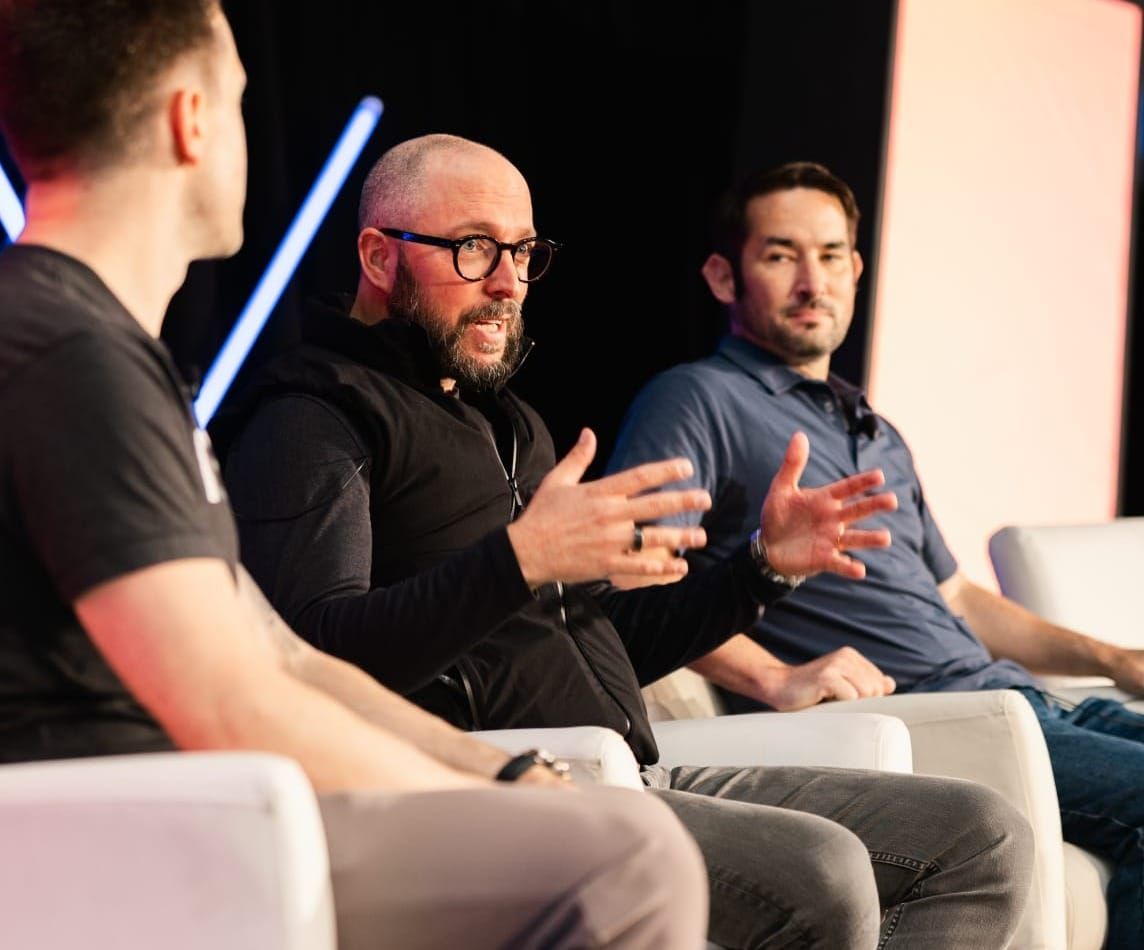
Columbus-based Intrinsic Labs is adding a third name to its founding team. Yon Raz-Fridman, the serial founder behind Kano and Supersocial, is joining Jon Slemp and Greg Miller as co-founder and partner, the company announced today.
The move continues what Raz-Fridman last fall described as a "rare pause" — a stretch after the Supersocial acquisition when, for the first time in nearly fifteen years, he wasn't optimizing toward the next round or the next launch. That pause has since shaped a portfolio approach, including his work with AEYE Health and co-founding companies across women’s health and defense. What pulled him toward Intrinsic wasn't a technology pitch - It was an operator gap.
"The companies that built America's physical economy, the $200 million logistics operators, the $400 million construction firms, the family-owned industrials, all got skipped by the internet era, and it didn't hurt them much," Raz-Fridman said. "The AI era is different. AI does actual work — and the operators who learn to staff that work with AI won't just navigate the labor gap, they'll grow through it. More output, more capacity, more margin, without a bigger payroll. That's a once-in-a-generation chance to rebuild how mid-market companies compound."
Intrinsic is built to address that challenge head-on. Slemp and Miller have been deploying AI workers into mid-market logistics, construction, insurance, and industrial operators, the brownfield environments most enterprise software was never built to serve. No rip-and-replace. No greenfield fantasies. The agents run inside the spreadsheets, PDFs, email threads, and legacy ERPs the team already uses, and every engagement ties to a specific operating KPI.
That positioning, AI-as-workforce rather than AI-as-software, is the thesis Raz-Fridman says convinced him.
"Most of the AI market is selling software to operators who need workforce. That's the whole sentence," he said. "You don't license a person, you hire them to do a job, you measure them on what they produce, and you expect them to work inside the systems you already have. That's what an Intrinsic AI worker is."
The distinction matters commercially. Software gets evaluated by IT and procurement on a license line. Workforce gets priced on throughput, hours recovered, invoices coded, RFIs closed, and hits the P&L rather than the IT budget. It's the conversation mid-market CEOs are already having about every other hire they make.
For Slemp, the addition of Raz-Fridman expands the surface area of a services firm that is also, increasingly, a studio. Intrinsic spins out AI software businesses alongside its client work, and scaling that side of the business requires capital formation instincts the two managing partners didn't have in-house.
"At our core Greg and I are operators. We're at our best working on difficult problems, understanding a business deeply, building teams and systems, and getting frontier AI capabilities into production," Slemp said. "There is plenty of demand for what we do, the constraint in the mid-market is access. Everything runs on trust, relationships, and distribution. Yon expands that surface area immediately."
The two first met the way a lot of Columbus deals start: a cold LinkedIn message and an afternoon at Rev1 Ventures. A thirty-minute meeting ran long. What Slemp said stuck with him wasn't the resume. It was the posture.
"He's done it before, but he still operates like he hasn't," Slemp said. "He's curious, hands-on, biased toward action, and most importantly he's hungry to make a dent in the universe still. That combination is rare."
The company's existing deployment model is methodical by design. Intrinsic starts with one workflow that has clear economic impact, something repetitive, measurable, and tied directly to cost, throughput, quality, or capacity. The team maps the process end-to-end as it actually works, not as it's supposed to. Then the AI worker goes live inside the tools the team already uses, and the engagement is measured on accuracy, time saved, throughput, error rates, and exceptions.
"Most AI efforts fail for two reasons: companies try to change everything at once, and they don't have a clear definition of what success looks like," Slemp said. "We take the opposite approach. One workflow. Prove ROI. Expand from there."
Both founders are making a larger case about geography. The center of gravity for operational AI, they argue, will not be San Francisco. It will be wherever the operators are: the logistics companies, general contractors, manufacturers, and regional carriers clustered in the belt running from Columbus through Cleveland, Cincinnati, Indianapolis, and Pittsburgh.
Raz-Fridman said the signal to watch is linguistic.
"The thing I'd watch for is less dramatic and more effective: the first time a mid-market CEO in Ohio says 'we staffed that workflow with AI' the same way they'd say 'we hired a new controller,'" he said. "When the vocabulary shifts, the category is real. And we're confident that it's coming."
Near-term, the company is hiring across product, engineering, and forward-deployed roles, with plans to at least double headcount this year. Geographic expansion into similar Midwest markets is next.
"We believe that the companies that win over the next decade will not be the ones that adopted AI," Raz-Fridman said, "but the ones that learned how to staff it."